21/10/2026 06:57
Workshop or Pickup Counter? Telegram Business Location for Cambodian Shoe-Repair Shops
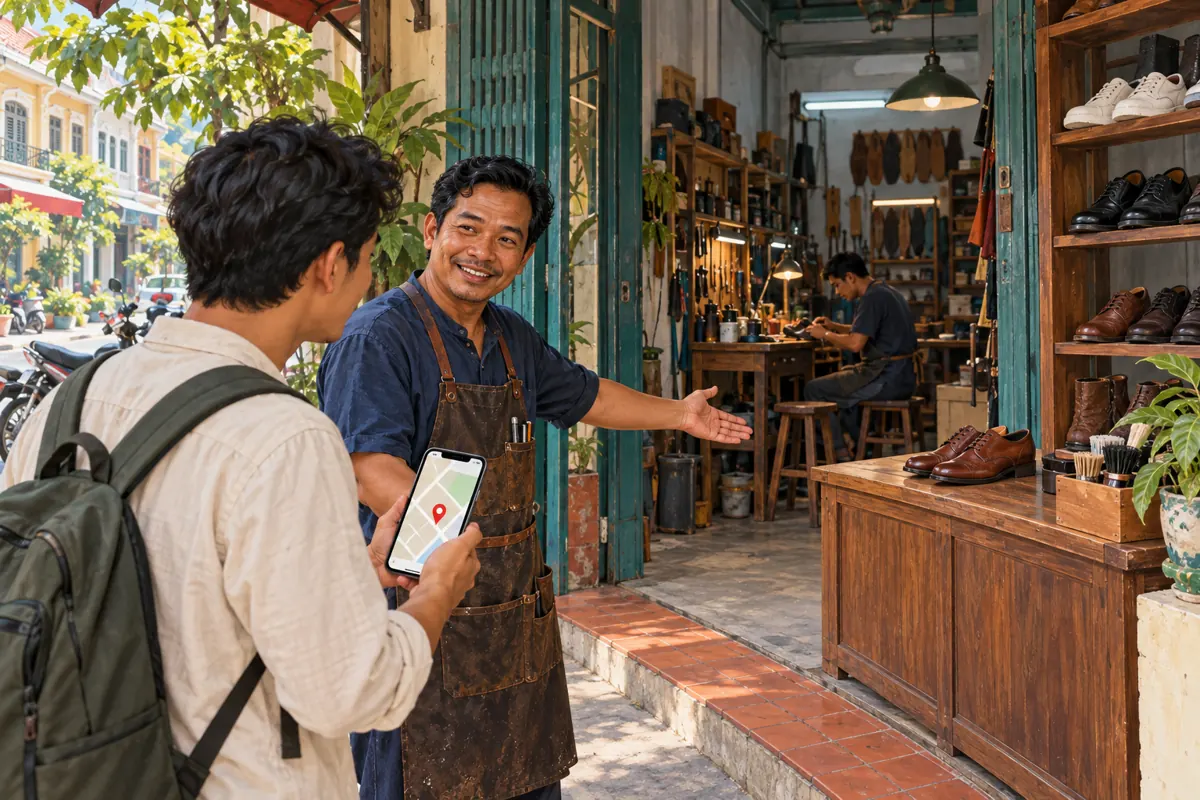
A repair video can show careful stitching and a beautiful finished shoe while leaving one practical question unanswered: where should the customer bring their pair? For a Cambodian shoe-repair business, the workshop, collection counter and filming location may be different places. Promoting the video before resolving that distinction can create avoidable messages and wasted journeys. A useful Telegram presence should connect interest in the work with clear arrival instructions. This guide explains how to choose a public destination, check its location information and test the journey before sharing a campaign or considering an SMM panel service. The examples are hypothetical, and the illustrations depict a fictional shop.
1. Decide what the public location represents
Start with the customer's task. Are they dropping off shoes for inspection, collecting a completed repair or meeting someone for an appointment? Choose the destination that can actually handle the task advertised. An attractive workshop is a poor public destination when nobody there accepts walk-in customers. Write a simple internal statement: this location is our customer drop-off and collection counter.
In a hypothetical Phnom Penh business, repairs happen upstairs while customers use a ground-floor counter beside the entrance. The owner films upstairs because the light is better. The campaign should still direct visitors to the counter. If repairs happen at a separate private residence, the same principle applies: establish an appropriate customer meeting point before publishing directions. Do not let the camera position decide the address.
2. Understand the location feature before configuring it
Telegram's official Business introduction describes a feature for showing a business location on a map and places Business tools under Settings > Telegram Business. Check the options and subscription requirements shown in your current app before planning around them. The article's operational workflow does not require assuming that every account already has access.
Telegram's technical documentation represents a business location with a textual address and optional geographical coordinates. Treat the written address and map position as two details to verify. For a customer, a precise-looking pin can still be confusing when the entrance is around the corner. This is a location on the business account; do not assume that adding it also inserts accurate directions into every channel post, forwarded video or promotional graphic.
3. Build an address that survives the final turn
Prepare the address outside the settings screen first. Include the premises identifier and street details that actually apply, followed by the relevant locality and city or province. Add a short entrance instruction when necessary. Check spelling with someone who handles customer arrivals. A description such as near the market is useful context, but it should not carry the entire burden of identifying the shop.
For Cambodian customers, prepare directions in the language they use with your staff. If you also serve English-speaking visitors, maintain an equivalent version without changing place names casually. Use the same recognizable shop name across the profile, entrance photograph and messages. Describe stable landmarks rather than a vendor who may move tomorrow. Keep a longer explanation available for customers who need help with the last part of the journey.
4. Check the pin against the public entrance
When configuring the available location controls, compare the selected position with the premises and the street customers should approach. Avoid accepting a convenient nearby result merely because its name resembles yours. Look closely for parallel lanes, corner buildings and entrances facing away from the main road. Save the details, reopen the profile and inspect what a visitor actually sees.
Then check the location on site. Stand at the intended entrance and compare the displayed map with the surrounding buildings. If opening the location offers a route through a mapping app, inspect where that route ends. A route to the back wall needs an explanatory arrival note or a corrected destination. Never invent an entrance or mark a neighboring business as your own to make the route look simpler.
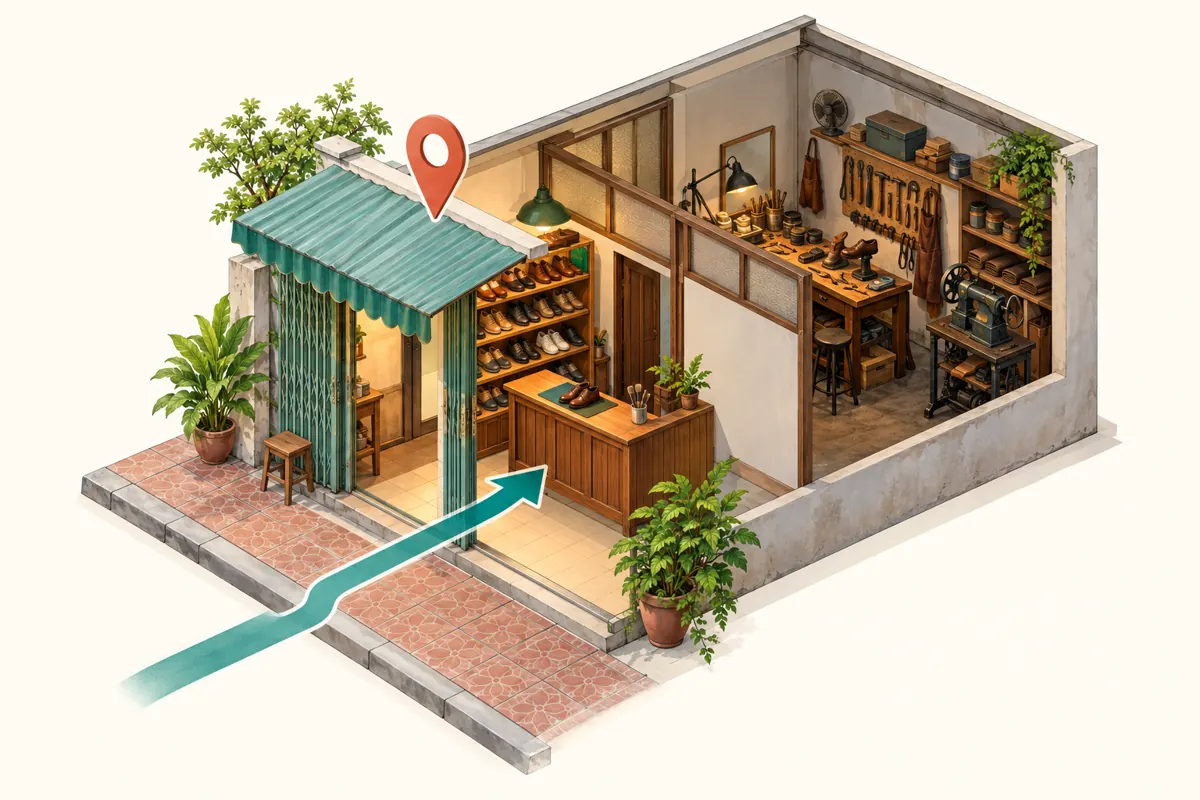
5. Pair directions with a real entrance photograph
A map helps people reach an area; a current photograph helps them recognize the correct doorway. Take a customer-facing photo from a safe position outside. Show the sign, entrance and distinctive permanent features together. Avoid a tightly cropped shoe display that could belong to any shop. Check that the image does not reveal customer receipts, private telephone numbers or people who have not agreed to appear.
In a hypothetical Siem Reap shop, the customer counter sits under a teal awning, while an adjacent staircase leads to the repair room. A useful arrival message identifies the awning and explains that customers should use the counter. Send the real entrance photograph when needed. The generated illustrations accompanying this article explain the workflow; they must not be reused as evidence of a real shop's frontage.
6. Separate finding the shop from being ready to visit
An accurate address does not mean a repaired pair is ready, an inspection is free or a staff member can accept a delivery immediately. State the relevant condition beside the invitation to visit. For example, a hypothetical collection message could say: please wait for our repair-complete confirmation before travelling, then bring your collection reference to the front counter. Keep private order details inside the customer conversation.
For appointment-based work, confirm the visit separately from sending directions. Agree on the destination, purpose and expected arrival window. A customer bringing shoes for assessment should understand that the repair method and completion date may require inspection. Avoid turning a general promotional caption into an unconditional promise that every visitor will receive immediate service.
7. Test the journey with someone unfamiliar with the shop
Ask a colleague who does not normally give directions to start from the actual promotional post. Have them identify the business account, open its location information and explain where they would arrive. Do not coach them through the first attempt. Note the exact point where they hesitate: recognizing the account, choosing the entrance or understanding whether they need an appointment.
A useful test ends with specific corrections. If the tester finds the correct building but chooses the staircase, improve the entrance instruction. If the post opens a channel but leaves the business contact unclear, fix that handoff. Repeat only the part affected by the correction. You are checking whether the route is understandable, not collecting praise for the campaign design.
8. Match the promotion to the verified destination
Once the arrival information works, write the promotional invitation around a real next step. A repair demonstration might invite customers to send a photo of the damaged area before arranging an inspection. A collection announcement should address customers whose work is complete. These are different journeys, even when both eventually lead to the same counter.
Review each place where the campaign will appear. A short video, channel announcement and printed card may carry different amounts of context. Each should still make the next action clear. Keep the location wording consistent, and make sure the destination remains understandable when someone encounters only one item. Do not assume viewers have already watched the explanation posted earlier in the week.

9. Keep SMM service claims separate from location readiness
The supplied smmchhean.com catalogue includes the exact public service name “Telegram - Channel/Group Members ~ Max 1.5M ~ 3 days No Drop ~ 100k/days ~ INSTANT”. Its title identifies a channel/group membership service, and its supplied category labels it as low-quality accounts. The description is empty. The title's quantity, speed and retention wording should not be treated here as verified delivery conditions.
That listing provides no basis for claiming it improves a Telegram Business address, reaches nearby shoe owners or generates visits to a collection counter. Purchased engagement is not evidence of genuine interest, sales, ad delivery or Cambodian users. A member count cannot validate the route you have prepared. Do not assume the service can target a business profile simply because both destinations exist inside Telegram.
If evaluating any panel listing, first establish whether its documented purpose fits a legitimate need and complies with applicable platform rules. Clarify missing conditions before spending money, and keep any service record separate from customer-arrival observations. For a shop whose immediate problem is confusing directions, correcting those directions is the concrete next action. A panel purchase is not a prerequisite.
10. Avoid location mistakes that return after launch
Common mistakes include using the owner's current position while configuring the address elsewhere, copying a former branch's directions, showing an old frontage photograph and describing the workshop as a walk-in counter. Another mistake is adding an appointment condition only in a later reply, after the promotional message has already encouraged travel. Review the invitation and arrival information together.
Assign one person to maintain the location details and a second person to verify significant changes. When moving a counter or changing access, review the profile, active promotional posts, saved direction messages and printed materials still in circulation. Tell customers with upcoming visits about the change directly through the existing conversation. A corrected profile alone cannot resolve every earlier instruction someone has retained.
11. Review actual arrival problems
Keep a modest operational log of questions such as which entrance, whether an appointment is needed and whether a courier may drop off shoes. Record the issue and the correction without copying unnecessary personal information. If someone says the map led them to the wrong side, verify the report on site before deciding what caused it.
Judge improvements by whether the specific confusion is resolved. A customer reaching the correct counter is useful evidence about that journey, but it does not prove a promotion caused a sale. Likewise, fewer direction questions could reflect fewer enquiries. Read observations alongside the volume and nature of actual conversations, and avoid turning a small set of experiences into a performance claim.

Frequently asked questions
Should I display my home workshop if customers collect elsewhere?
Use the appropriate customer destination for the visit you advertise. A private workshop address can create confusion when no one there receives customers. Explain the collection arrangement and verify that the public counter has permission and capacity to accept the items. Do not imply that customers can inspect or collect work at a location that cannot provide that service.
What if the Telegram Business location option is unavailable?
Check your current app and the account requirements shown in its settings. You can still prepare and test a clear written address, entrance photograph and appointment instructions for customer conversations. Avoid promising a profile feature you cannot currently configure. The essential task is making the destination understandable before promoting a visit.
Can one address serve both customers and delivery riders?
Yes, if both should arrive at the same counter and staff can handle both tasks there. Explain any differences in the accompanying message, such as whether a rider needs an order reference or prior confirmation. If deliveries use a different entrance, send task-specific directions rather than assuming the public profile contains every exception.
Will adding a location or buying members bring nearby customers?
A location helps visitors understand where the business is; it does not establish local demand. A purchased membership count also does not show that people are Cambodian, nearby or interested in shoe repairs. Assess customer questions, agreed inspections and completed transactions separately, without attributing them to a service unless reliable evidence supports that connection.
Explore the current service catalogue, create an account, or ask a specific question through support tickets.
Prepared with AI assistance. Illustrations explain the workflow and do not represent customer results.