22/10/2026 04:39
Same Link After Refilming? YouTube Demo Replacement for Cambodian Display-Rack Shops

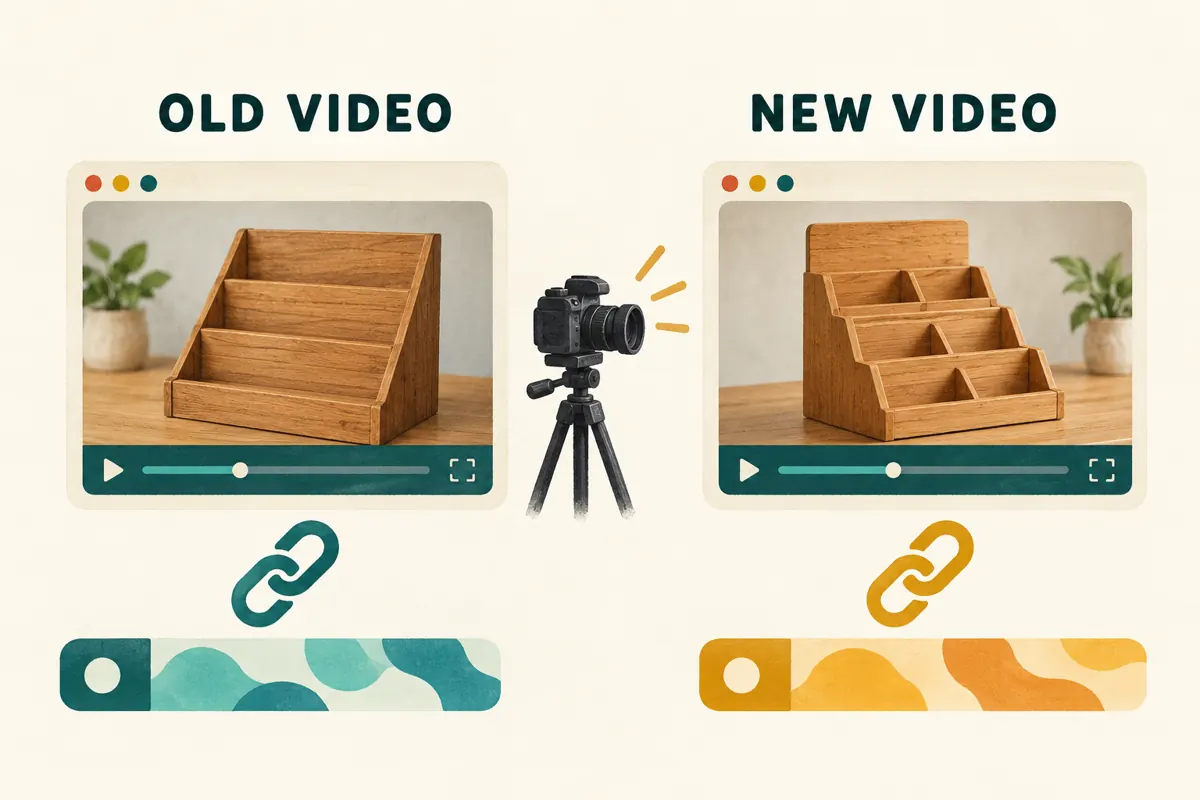
A product demonstration can become outdated even when the filming is clear. A supplier changes the support feet, the assembly sequence changes, or the shop starts selling a different version. For a Cambodian display-rack business, the problem then extends beyond making another video: customers may still follow links from messages, product pages and printed instructions. YouTube states that a new upload receives a new URL; it cannot replace the existing video at its original address. This guide explains how to manage that transition, including what to do with promotion plans and SMM panel records, without treating an old audience count as proof that the new demonstration works.
1. Identify exactly what the old demonstration gets wrong
Start with the physical product, not the video statistics. Put the current rack beside the version shown on screen and compare the included parts, attachment method and finished appearance. Write one sentence describing the difference. In a hypothetical Phnom Penh shop, an older countertop rack has fixed supports, while the current model arrives with detachable feet. The old demonstration may still look attractive, but it no longer answers the customer's assembly question.
Separate an inaccurate instruction from a cosmetic change. A different background or packaging colour may not justify refilming an otherwise accurate guide. A changed fitting method does. Ask whether a customer following the recording could choose the wrong model, expect an unavailable component or assemble the product incorrectly. This question gives the team a practical reason for the update and prevents repeated uploads made only because the previous video attracted little attention.
2. Choose between editing information and filming a replacement
YouTube allows changes to an existing video's title and description, and offers trimming for existing footage. Those options can suit a mistaken product name or an unnecessary passage. They cannot supply a missing demonstration of a newly introduced component. If the essential action is absent, plan a separate recording. Avoid trying to make a fundamentally different product fit the old footage through a longer explanation beneath it.
Use a simple decision rule: keep the recording when the visible actions remain correct; consider an edit when removing a passage leaves a complete explanation; replace it when viewers need to see something different. In the hypothetical rack example, customers need to see how the detachable feet connect. A new recording is appropriate. Give the replacement a clear product-specific title, rather than relying on vague wording such as 'latest video', which becomes ambiguous after another update.
3. Find the places that still send customers to the old video
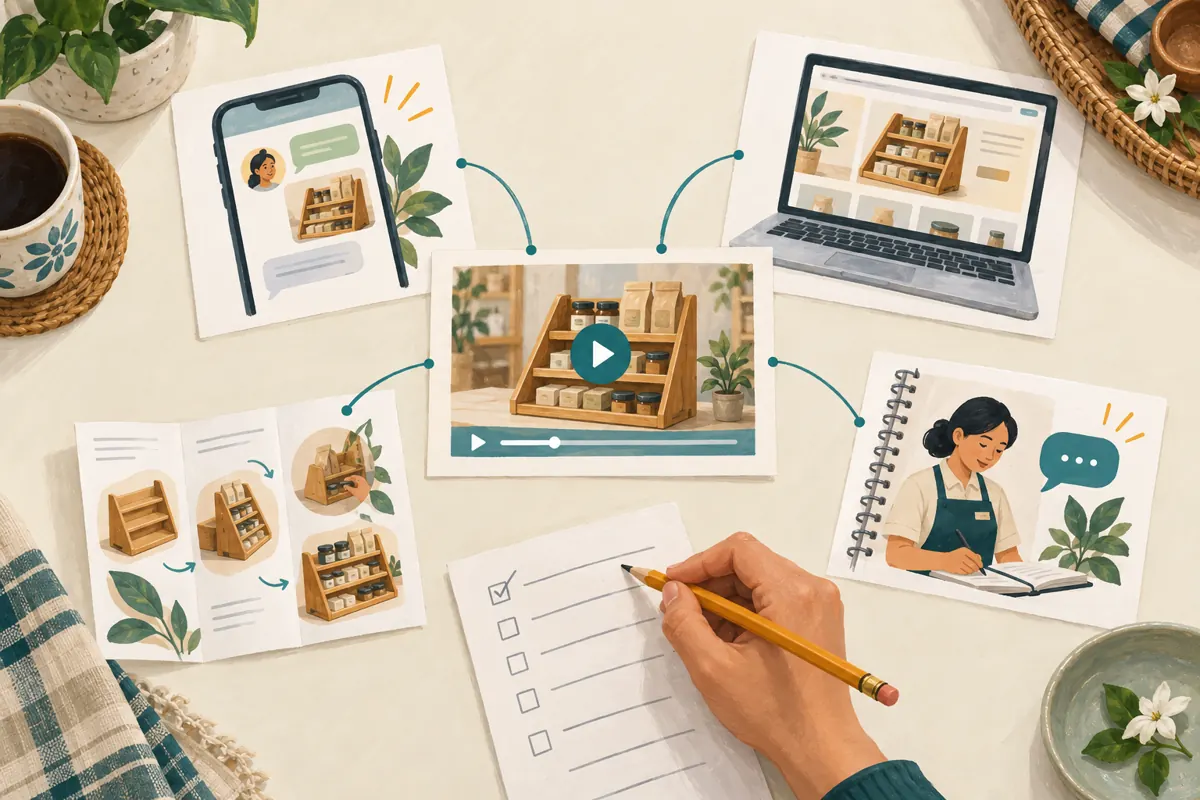
Before announcing the replacement, make a distribution inventory. Include the shop's product page, saved customer replies, social posts, relevant playlists and any printed assembly cards. Record the location, who can update it and whether it is still used. A simple note beside each entry is enough: editable, requires another person's help, or already distributed. This turns an uncertain cleanup into a manageable list of specific destinations.
Prioritise links that influence an immediate purchase or assembly decision. A current product page deserves attention before an old announcement with no active offer. Printed material needs a separate response because changing an online post does not alter a card already inside a package. Check remaining stock of those cards and replace incorrect inserts before dispatch. For materials already distributed, prepare a concise explanation staff can send when a customer asks about the older guide.
4. Make the replacement explain the product difference
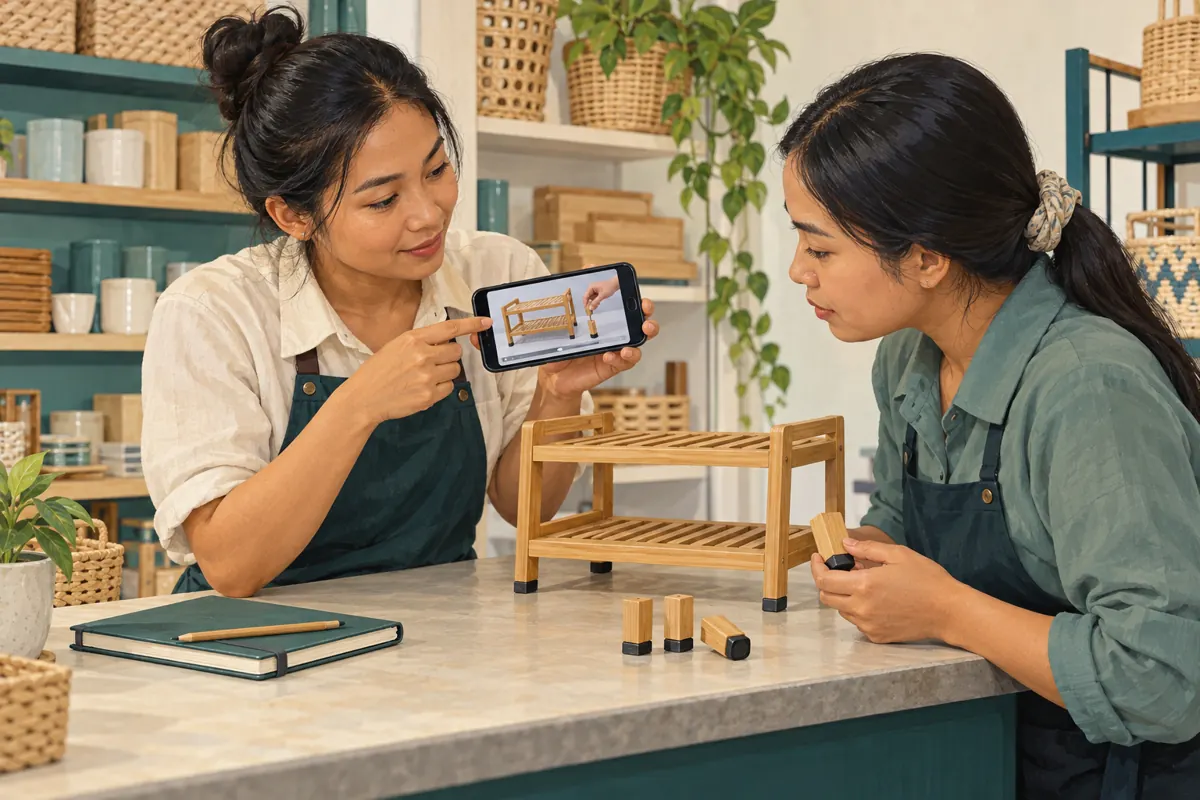
Film the identifying feature near the beginning. Show the detachable feet beside the rack before demonstrating installation, so someone arriving from an older message can recognise whether this is their model. Keep the actual connection visible rather than covering it with a hand or cutting directly to the completed stand. Explain which pieces come with the product and which items on the display are merely props.
For Cambodian customers, choose narration and supporting wording according to the people who actually buy from the shop. If the demonstration uses Khmer, have a fluent reviewer check the component names and the spoken instructions against the physical parts. Retain a model reference consistently across the video, product listing and staff notes. Do not infer that an English title will attract international buyers or that Khmer narration alone establishes the location of everyone watching.
5. Check the new upload before switching promotion
Ask a colleague who did not edit the video to review the uploaded version with the product beside them. They should identify the model, find the fitting step and explain what the customer must do next. Test the actual destination that will be shared, not just the original file on the editor's phone. This catches problems such as choosing the wrong upload or approving a local export that differs from the uploaded cut.
YouTube's visibility guidance distinguishes private review from unlisted sharing. Anyone with an unlisted link can watch and reshare it; it is not a confidential review room. Choose the setting according to the material and intended reviewers. Once the video is ready for public promotion, check its visibility and open the customer-facing link without relying on the channel owner's access. Keep one approved URL in the handover note so staff do not select between several similar drafts.
6. Decide what customers should encounter at the old destination
The old recording may still be useful for owners of the earlier model. In that case, clearly identify that model and explain the distinction wherever you continue sharing it. If the recording gives materially wrong instructions, stop directing customers to it. Unlisting only changes discoverability: people with the link can still watch. It therefore does not solve the problem of unsuitable instructions circulating through existing messages.
Choose the old video's treatment deliberately rather than deleting it during a rushed cleanup. YouTube says deletion is permanent, so keep any backup you need before making that decision. Separately preserve the business context: which model the video covered, why it was retired and which guide staff should now use. Do not leave misleading advice accessible solely to retain an impressive counter, and do not describe an older model's guide as current stock information.
7. Review SMM panel records without assuming a transfer
If the old URL appears in an SMM panel draft or an existing order record, flag that record before anyone submits more work against it. Preserve the original target and add a dated note explaining the replacement. Do not overwrite historical evidence to make an earlier request appear to have targeted the new upload. If a request already exists, ask support what options its actual terms permit; cancellation, redirection and refunds must not be assumed.
The supplied catalogue includes 'YouTube - Auto Comments ~ Emoji ~ Max 1M ~ 1k-3k/days ~ INSTANT'. Its title identifies an emoji-comment offering, but its description is empty, so there is no supplied basis to verify its mechanics, delivery claims or suitability. It is not a video-replacement service. YouTube prohibits artificial increases in engagement and warns that hired promoters' actions can affect a channel. Do not use purchased comments to make the replacement appear endorsed.
8. Switch the links with a clear staff handover
Give one person responsibility for coordinating the switch, while assigning individual destinations to whoever controls them. The handover should contain the old URL, approved new URL, product distinction and a short customer explanation. In the hypothetical shop, that explanation might say: 'This guide shows the detachable-foot model. Please compare the parts in your package before following it.' Adapt the wording into the language used with the customer.
Update each active destination and then open it from that location. Pasting the correct address into a worksheet does not prove the website button or saved reply was changed. Check the surrounding wording too: a new video paired with an old promise about included parts still creates confusion. When a destination cannot be edited, record that limitation and decide whether a fresh announcement or a direct response to affected enquiries is appropriate.
9. Evaluate understanding separately from attention
Keep the old and new recordings distinct in your review notes. Their exposure, publication timing and product context differ, so raw totals do not provide a fair verdict on filming quality. More useful questions are whether customers can identify their model, whether the demonstrated parts match the package and whether staff still receive the same assembly question. Record genuine enquiries in general terms without copying private customer details into a promotion report.
Purchased engagement is not evidence of genuine interest, sales, ad delivery or Cambodian users. A service status also cannot establish whether a buyer understood the fitting step. If customers remain confused, inspect the exact moment they mention and improve the explanation. Avoid responding automatically with more promotion. For a practical product guide, a clearly resolved assembly question can inform the next edit even when there is too little audience data for a broader conclusion.
10. Avoid the mistakes that create another replacement cycle
The most disruptive mistake is changing several things without recording which version is approved. A staff member then copies an old link from a recent conversation, another edits the product page, and both believe the task is finished. Keep the current guide reference beside the product's internal notes and mark earlier references as historical. Before the next supplier delivery, compare the arriving parts with that guide instead of assuming the same product name means an identical assembly.
Another mistake is treating a correction announcement as an advertisement. Explain what changed without exaggerated claims that the replacement is superior in every way. Do not imply that existing customers received a faulty product merely because a later model differs. Schedule a brief follow-up after staff have used the new guide: inspect unresolved link locations, review recurring questions and confirm that packing materials match the stock being dispatched. Close the task when the identified problems are resolved.
Frequently asked questions
Can I upload the new recording under the old YouTube link?
No. YouTube assigns a new URL to each new upload. Plan the replacement as a new destination and update the places you control. Keeping the same title or thumbnail does not make the new recording occupy the old address.
Should both versions remain available if customers own different rack models?
They can serve different needs if both demonstrations remain accurate for their respective models. Label the physical distinction clearly and train staff to ask which parts the customer has. Avoid sending everyone to the newer recording simply because it was uploaded later.
What if an SMM request already references the old video?
Preserve the original order information and explain the change through the provider's support process. Ask what its documented terms permit without assuming a transfer or cancellation. Independently check whether the activity complies with YouTube's rules; a correct target link does not make artificial engagement acceptable.
How should we help someone holding an outdated printed instruction card?
Ask which rack and components they received, then provide the matching approved guide with a brief explanation. Replace outdated inserts in packages still under your control. Record the issue so packing staff can prevent it recurring, rather than expecting customers to discover the update themselves.
Explore the current service catalogue, create an account, or ask a specific question through support tickets.
- YouTube Help: Replace or delete your video
- YouTube Help: Change video privacy settings
- YouTube Help: Fake engagement policy
Prepared with AI assistance. Illustrations explain the workflow and do not represent customer results.