20/10/2026 03:42
Who Wrote the Pump Demo? Telegram Author Signatures for Cambodian Shops

A water-pump demonstration can leave shoppers with two different questions: which model is shown, and who is responsible for the explanation? When several employees contribute to a Cambodian shop’s Telegram channel, a stock announcement, a technician’s observation and an installation offer can sound like the same promise. Clear authorship helps readers understand the context, provided the post also explains its limits. This workflow shows how to choose an appropriate identity, review what subscribers see and keep promotion records accurate. It is particularly useful before directing more attention to a demonstration or considering an SMM-panel service.
1. Find the authorship problem before changing settings
Start with a question customers actually ask. In a hypothetical Battambang pump shop, a technician films how to identify a pump’s model plate. The sales assistant uploads the clip, and the owner later publishes an availability notice. A shopper assumes the person who presented the demonstration also approved a particular installation. The problem is a missing distinction between presenting information, reviewing it and making a commercial commitment.
Read the channel’s recent posts and identify where that distinction matters. A holiday closure may need only the shop’s identity. A demonstration might benefit from naming its presenter. A quotation still needs an explicit scope and approval process. Write down the reader’s likely misunderstanding before choosing a feature. Otherwise, adding names can make the feed busier while leaving the original uncertainty unresolved.
2. Understand the three identity choices
Telegram normally presents channel posts under the channel’s identity. Its text-signature feature adds the posting administrator’s screen name without linking to that person’s profile. Telegram also documents an author-profile mode that lets administrators publish as personal profiles or other channels. These are different presentation choices, with different implications for how readers recognise the sender. The feature descriptions are documented in [Channels 2.0](https://telegram.org/blog/channels-2-0) and [Super Channels](https://telegram.org/blog/superchannels-star-reactions-subscriptions).
For a small shop, begin with the least complicated option that answers the reader’s question. Keep a shared business voice when individual authorship adds little. Consider a text signature when readers need to distinguish contributors. Consider a visible author profile only when that connection serves a clear purpose and the employee agrees. A displayed name is an attribution cue; it does not establish qualifications, verify technical accuracy or turn an observation into a warranty.
3. Separate the presenter, reviewer and publisher
Create a short internal note for each demonstration: who appears in the video, who checked the explanation and who will publish it. These may be three different people. If the assistant uploads a technician’s recording, the posting identity alone cannot explain the whole production process. Add an accurate sentence in the post when the distinction matters, such as identifying the presenter and stating that the shop reviewed the model information.
In the hypothetical shop, the technician explains where a model code appears, while the owner confirms which pictured items are currently stocked. The caption should preserve those separate responsibilities. Avoid presenting the technician as the author of an availability promise they never approved. Likewise, do not change an employee’s identity to another person’s name merely to make a signature match the video. Clarify the contribution in ordinary language instead.
4. Choose a consistent rule for each kind of post
Agree on a simple editorial convention before anyone touches the channel settings. Business announcements should clearly speak for the shop. Educational demonstrations should identify the relevant contributor when that helps understanding. Supplier material should disclose its source and the shop’s relationship to it. A staff member’s personal experience should be described as such, with enough context to prevent readers from treating it as a universal product claim.
For Cambodian readers, keep the person’s name and role consistent across Khmer captions, English model references and spoken introductions. Ask the employee which spelling they use. Preserve genuine model codes exactly. Avoid alternating between an unexplained nickname, a job title and a different English name across consecutive posts. Recognition depends on consistency, and customers should not have to guess whether several signatures refer to the same person.

5. Configure deliberately and check the posting identity
Telegram documents the author-profile setup under Channel Settings, then Administrators, using Sign Messages and Show Authors’ Profiles. It also describes selecting the posting identity through the profile picture in the message bar. Consult the controls available in your current app rather than relying on a remembered screen layout. These instructions come from Telegram’s [Super Channels announcement](https://telegram.org/blog/superchannels-star-reactions-subscriptions).
Before enabling a more personal presentation, agree with contributors on which identity they will use and what business contact route the post should give readers. Inspect the intended public-facing profile together. Do not assume an employee wants their personal presence associated with every shop announcement. If the available controls or resulting display are unclear, keep the existing presentation while testing. A clear sentence naming a contributor can solve the immediate editorial problem without rushing a channel-wide change.
6. Run a reader-view test before promotion
Prepare a harmless sample in a controlled test channel configured to match the intended setup. Have a colleague view it as an ordinary reader. Ask them to identify the shop, the contributor and the appropriate place for an enquiry. Check what happens when they tap the displayed author, if that option is present. Use the devices your team actually works with, and record any differences that affect the instructions.
Then review the real published demonstration before promoting its link. Look at the identity, opening sentence, model reference and enquiry route together. Ask the reviewer to explain what the post promises without coaching them. If they believe the named technician has personally approved every installation, revise the wording. Keep a brief dated review note; a screenshot alone cannot record the misunderstanding the reviewer found or the decision that resolved it.
7. Make the demonstration useful without relying on the signature
A good pump-shop post should answer a bounded question. For example, show where to find the model identifier and explain which photograph a customer should send when asking about a replacement part. State which product the footage depicts. If the clip shows one sample unit, say so. A familiar author cannot compensate for an unreadable label, missing model reference or sweeping compatibility claim.
In a hypothetical Siem Reap shop, a useful enquiry request might ask for a clear model-plate photo and a photo of the fitting being discussed. The post should explain that staff will review those details before confirming a suitable item. Avoid inviting readers to perform electrical work for the sake of supplying content. Keep the promotion focused on helping someone ask a better question, with the shop’s normal contact route clearly stated.
8. Decide whether an SMM service addresses the actual need
The supplied smmchhean.com catalogue includes the exact service name “Telegram Post Views ~ Max 100k ~ 20k/Days ~ 0-1 Hours”. The title identifies a post-view service, but the supplied description is empty. Its numerical and timing wording is catalogue text, not independently verified delivery evidence. There is no supported basis here to claim that it supplies Cambodian viewers, qualified enquiries, advertising delivery or people interested in pumps.
Ask what problem remains after the authorship review. If customers cannot understand the demonstration, revise it. If they contact the wrong person, clarify the enquiry route. If the goal is local customer acquisition, require evidence relevant to that goal before choosing a promotional method. Purchasing engagement does not establish genuine interest or sales. It also does not validate the named contributor’s expertise. Review applicable platform rules and documented service terms before deciding whether any purchase is appropriate.
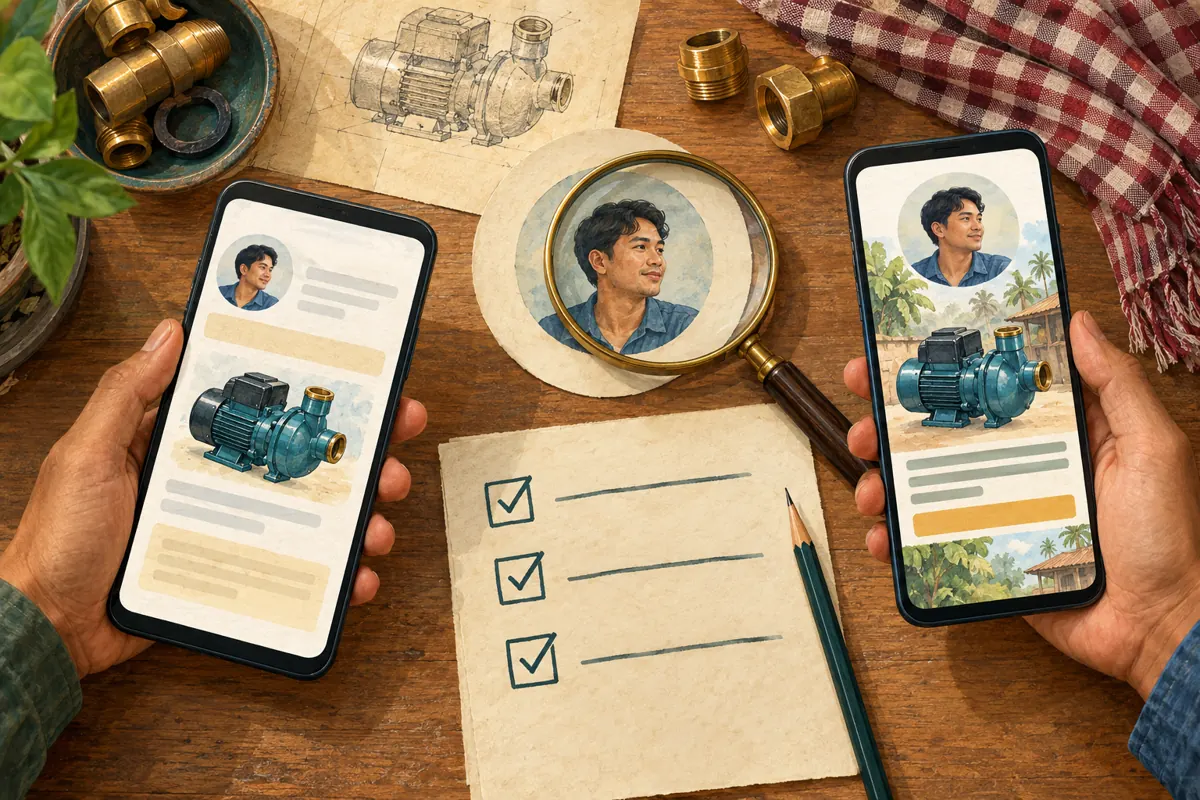
9. Preserve the approved identity in the promotion record
If a service is still being considered, prepare a record that identifies the exact post, its visible author presentation, the approval date and the purpose of the promotion. Include the exact service title and any unresolved questions about its terms. A post reference identifies the destination; the authorship note explains the version your team reviewed. Neither requires sharing employee login details or private conversations.
Keep commercial results in a separate enquiry record. Note whether someone supplied a model code, asked about compatibility or requested a quotation. Record confirmed transactions through the shop’s ordinary sales process. A service status or change in a displayed count cannot establish those outcomes. If the post changes after review, inspect it again before reusing the promotional brief, especially when the contact person, product scope or attribution has changed.
10. Avoid authorship mistakes that create false confidence
One common mistake is treating the visible publisher as the technical reviewer. Another is adding a role such as specialist without a sound basis. A third is letting a personal anecdote read like the shop’s general guarantee. Correct these problems in the wording and review process. Adding a signature to an ambiguous claim can make the claim appear more authoritative while doing nothing to make it more accurate.
Another mistake is choosing settings once and assuming every later post uses the intended identity. Make identity checking part of the final review, alongside the product and destination checks. Also consider staff changes: an old demonstration may still name someone who no longer handles enquiries. Give readers a maintained shop contact route and review affected posts when responsibilities change. Do not promise that changing a setting will automatically repair historical attribution.
11. Evaluate comprehension and maintain the convention
After using the convention, review actual points of confusion. Are readers asking who presented the demonstration? Do they mistake a general explanation for an installation recommendation? Are enquiries reaching the intended business contact? These questions provide a practical reason to keep, simplify or revise the authorship approach. Write down the content change associated with each problem rather than attributing every improvement to the signature feature.
Set a review trigger for new contributors, changed responsibilities and demonstrations that become outdated. Revisit the convention when the team expands beyond a single presenter. The aim is a readable channel where identity supports the explanation and the shop can account for what it publishes. Promotion is easier to assess when the underlying post already makes its author, scope and next step understandable.

Frequently asked questions
Does a signature prove that the technician checked the post?
No. The visible publisher may be uploading material prepared by somebody else. Maintain an internal reviewer record and explain relevant contributions in the caption. Only say that a technician checked a claim when that review actually happened. A name beside a post is not evidence of a completed approval process.
Should a one-person Cambodian pump shop enable author profiles?
Only if connecting the channel post to that person helps readers and suits the owner’s preferences. A consistent shop identity may already be sufficient. Start with the customer’s need: understanding the demonstration, finding the correct product and contacting the business. More visible identity is not automatically more useful.
What if an assistant publishes a video presented by someone else?
Keep the publishing identity accurate and identify the presenter in the post where useful. Record who checked the technical explanation. Do not impersonate the presenter to make the displayed name match the footage. Readers need an honest explanation of responsibility, especially when the post also contains availability or installation information.
Can purchased post views show that the new authorship format works?
No. Purchased engagement cannot demonstrate that viewers understood the attribution, live in Cambodia or intend to buy. Use reader checks and actual questions to identify confusion. Keep any service delivery record separate, and avoid presenting a displayed count as evidence that customers trust a technician or endorse the shop.
Explore the current service catalogue, create an account, or ask a specific question through support tickets.
- Telegram: Channels 2.0 and More — Admin Signatures
- Telegram: Super Channels, Star Reactions and Subscriptions
- Telegram API: Channels, supergroups, gigagroups and basic groups
Prepared with AI assistance. Illustrations explain the workflow and do not represent customer results.