19/10/2026 08:01
Where Do Viewers Leave? A YouTube Retention Review for Cambodian Appliance Shops

A product demonstration can attract attention while leaving the most important question unanswered. For a Cambodian appliance shop, that question might be which measuring cup belongs with a rice cooker or how to identify the correct inner-pot marking. Before spending more on promotion, investigate whether the video makes that detail easy to follow. This workflow uses YouTube audience retention to locate moments worth reviewing, then combines those observations with a practical comprehension check. It also explains why an SMM panel service cannot establish that viewers understood the demonstration. The shop, scenes and editing decisions below are hypothetical examples, not customer results.
1. Give the review one customer question
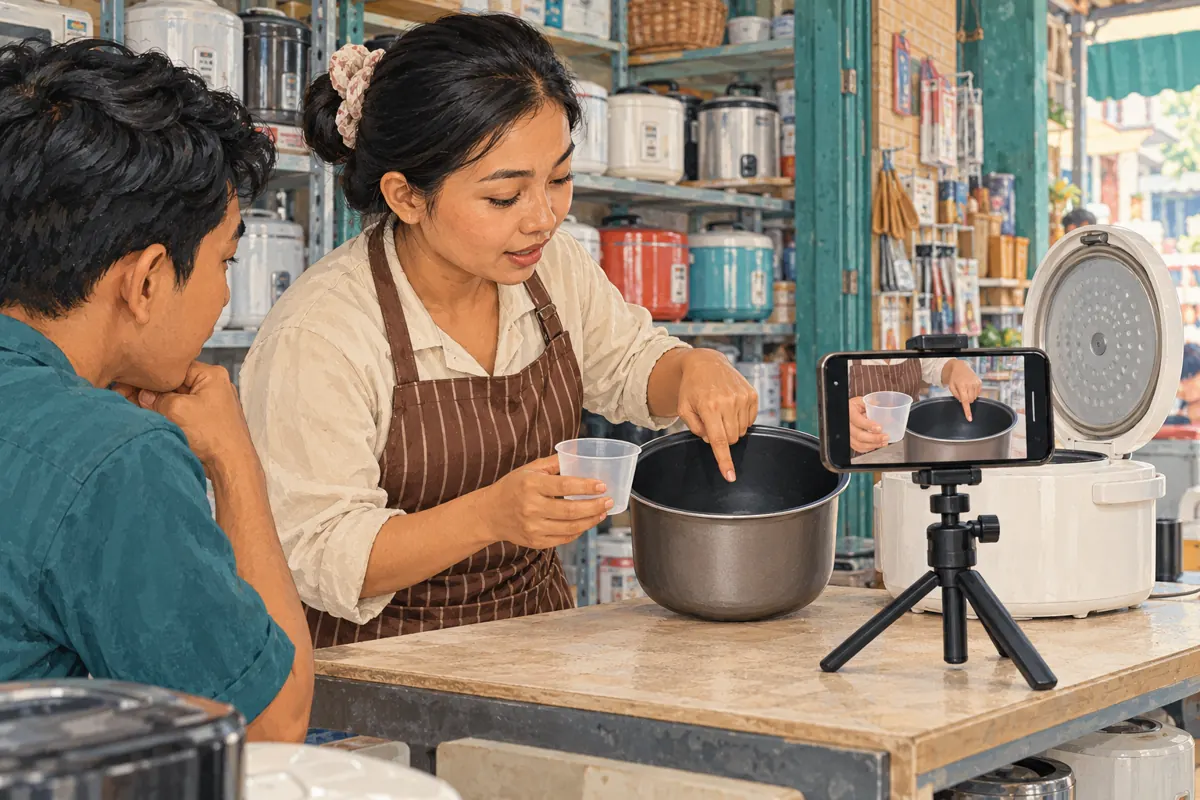
Imagine a hypothetical appliance shop in Battambang that has published a Khmer-language rice cooker demonstration. The owner wants prospective buyers to recognise the supplied measuring cup and understand that the demonstration applies to the model shown. The video also contains a shop introduction, packaging shots and a closing invitation to enquire. Instead of asking whether the whole video performed well, the owner chooses one review question: can someone identify the correct cup after watching?
Write that question above the review notes. It gives the editor a reason to examine particular footage and prevents the discussion from becoming a contest over the largest visible number. A useful video may help an existing customer use a purchase correctly without producing a new sale. Conversely, a widely watched clip may still omit the detail that customers need. Decide which practical outcome this particular demonstration should support.
2. Open the report and record its context
YouTube’s official retention guidance directs desktop users to YouTube Studio, Content, the chosen video’s Analytics, then Overview or Engagement to find Audience retention. The report is specific to a video, and its data typically takes one to two days to process. Highlighted key moments require a video at least 60 seconds long with at least 100 views; qualifying does not guarantee every highlight will appear.
Record the video title, public link, review date and selected reporting period. Add the main places where the shop shared it, such as an existing customer conversation or its own social page. Note any promotion that occurred during the period. These details provide context for later comparisons; they do not identify individual viewers or prove where customers live. If usable information is missing, mark the review as incomplete and conduct a direct viewing check instead.
3. Treat a dip as a location to investigate
According to YouTube, a retention dip can mark skipping or viewers leaving. A spike can reflect repeated viewing or sharing, including repetition caused by unclear content. Neither shape explains the viewer’s motive by itself. Use the report to choose footage for inspection, then keep your explanation provisional.
In the hypothetical shop video, suppose a dip appears during a long packaging discussion before the cup demonstration. Write the observation narrowly: the dip overlaps the packaging explanation. Possible explanations include unnecessary repetition, viewers seeking the practical step, or an opening that attracted people with a different question. Do not rewrite that observation as Cambodian viewers dislike packaging. The report does not support such a broad conclusion. Replay the lead-in, the moment itself and the following scene before deciding what deserves attention.
4. Inspect what the viewer actually sees and hears
Review the selected passage on a phone at an ordinary viewing size. First watch with sound and ask whether the narration refers to something clearly visible. Then inspect the picture separately. Does the presenter say this cup while holding two similar objects? Does a hand cover the detail being explained? Does the camera move away just as the viewer needs a close look? These are observable production problems that can justify an edit without guessing anyone’s motivation.
For a Khmer demonstration, ask a fluent reviewer to check the spoken explanation against the actual model and its instructions. Imported packaging may use another language, so pointing to a box is not necessarily an explanation. Keep model-specific guidance explicit and avoid implying that one demonstration applies to every cooker. Preserve necessary operating cautions even if a slower passage seems less entertaining. The purpose of the review is clearer understanding, not removing every pause.

5. Separate observation, explanation and editing decision
Use three short entries for each passage. The observation describes the footage and report. The explanation states a possible reason for the pattern. The decision names a change the editor can actually make. For example: the presenter discusses the supplied cup while the camera remains on their face; the object may be difficult to identify; record a steady close-up showing that cup beside the inner pot. This creates a reviewable decision without presenting an inference as a fact.
Add an alternative explanation before approving the work. Perhaps viewers already knew the cup and wanted the next step. That possibility suggests keeping the explanation concise rather than repeating it at greater length. If the team cannot name a visible problem or a useful change, leave the passage alone for now. A graph does not create an obligation to edit, and uncertainty is a valid review outcome.
6. Choose one improvement the shop can deliver
For the hypothetical shop, the first revision could replace a distant shot with a close-up while keeping the same explanation. Another reasonable choice could shorten a repeated introduction so the promised demonstration begins sooner. Select one main change and write its purpose: make the supplied cup identifiable, or remove a delay before the relevant action. A vague instruction such as improve engagement leaves the editor without a concrete acceptance criterion.
Keep the product, intended audience and central question comparable when practical. If the next video also changes language, presenter, product category and distribution, its results cannot isolate the effect of the close-up. This is still useful creative work, but it is not a controlled experiment. For a small shop, a modest improvement supported by a clear viewing check is often a better decision than an elaborate comparison that the team cannot interpret.
7. Check comprehension before promoting the revision
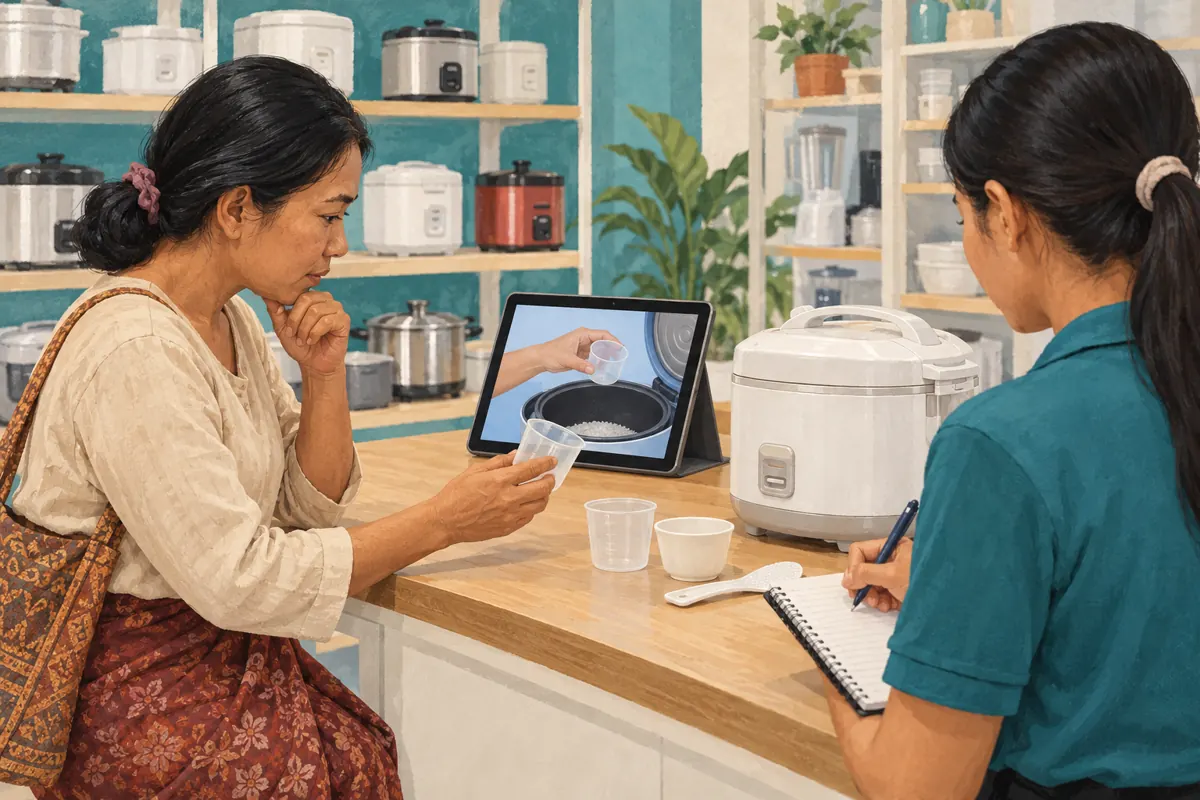
Invite a willing colleague who did not edit the clip to watch it once. Ask an open question afterwards: which cup did the presenter use, and what tells you that? Avoid leading questions such as was the close-up clearer. Let the person describe the answer before explaining what the team intended. Record the confusing detail rather than collecting praise. One person’s response is a usability clue, not a representative survey of Cambodian buyers.
If the explanation remains unclear, inspect the shot and wording again. The cup might be visible but never distinguished from an ordinary kitchen cup. If the viewer understands it, prepare the revised video for normal sharing with people who have that question. Use a message that accurately describes the demonstration. Do not promise a universal cooking result or imply that watching replaces the product’s own instructions.
8. Apply a firm decision rule to SMM services
The supplied catalogue includes the exact public service name YouTube Like ~ Max 5k ~ 5k/days ~ Instant ~ 𝐍𝐎 𝗥𝗘𝗙𝗜𝗟𝗟. Its name identifies a likes offering, but the brief contains no supporting description. The speed, quantity and refill wording therefore should not be treated here as verified operating terms. More fundamentally, a likes service does not answer whether someone recognised the measuring cup or found the demonstration useful.
YouTube’s fake engagement policy prohibits artificial increases in views, likes and other metrics, and says a hired promoter’s actions can affect the channel. For this workflow, do not purchase artificial engagement to influence the review or make the revision appear successful. Purchased engagement is not evidence of genuine interest, sales, ad delivery or Cambodian users. If someone proposes a promotional service, establish what work it actually performs and whether that method complies with platform rules before considering it.
9. Compare the next review without claiming causation
Choose a review date that allows information to accumulate, and use a comparable reporting window where practical. Write down differences in distribution: perhaps the original was shared with existing owners while the revision reached people still choosing an appliance. Those groups may need different explanations. Also note whether the revised video is substantially shorter. A better-looking overall result does not automatically show that one camera change caused improvement.
Bring the evidence back to the original question. Can a fresh viewer identify the cup? Are genuine enquiries still asking which object the presenter meant? Does the footage now show the detail at the moment it is explained? Retention can help locate another passage to inspect, while customer questions reveal issues worth addressing. Keep sales records separate, and do not attribute a purchase to the revised scene unless the available evidence actually supports that connection.
10. Avoid fixes that make the lesson harder to use
Common mistakes include cutting every quiet moment, adding constant movement, burying the answer behind a dramatic opening and judging an instructional video by whether everyone watches its closing message. A customer may need time to inspect a small component. Another may finish after finding the answer. The useful question is whether the video serves its stated purpose, not whether every departure can be prevented.
Close the review with a short production note: the question examined, the passage inspected, the change approved and what remains uncertain. Assign the next action to one person. If the footage already explains the task clearly, the next action may be a different demonstration addressing a genuine unanswered question. Keep the original review record so later staff can understand the decision. This turns analytics into a manageable editing habit rather than a recurring demand for more visible engagement.
Frequently asked questions
What should a small Cambodian shop do when retention information is missing?
Start with a direct comprehension check. Give a willing viewer the same practical question the video is supposed to answer, let them watch, and ask them to explain the relevant step. Inspect any confusing passage yourself. You can improve an obscured object or an ambiguous explanation without waiting for an analytics highlight.
Should we delete a demonstration because viewers leave before the end?
No. First check whether the video contains an error, fails to deliver its promise or simply completes the useful explanation before the closing material. Departure alone is not a deletion criterion. If the content remains accurate and useful, improve future filming or prepare a clearer follow-up instead of removing a resource customers may still need.
Can a rise in likes confirm that the new close-up worked?
Likes do not directly measure whether viewers identified the cup. A genuine response can be encouraging, but comprehension needs a more relevant check. Ask viewers to describe the object or examine whether related questions remain unresolved. Purchased likes provide no valid confirmation of understanding and introduce the platform-policy issue discussed above.
How can we assess a Khmer explanation if the editor mainly speaks English?
Have a fluent Khmer reviewer examine the spoken meaning alongside the product and the intended action. Ask them to flag ambiguous references, unfamiliar terms and wording that suggests a broader claim than the demonstration supports. The English-speaking editor can still assess framing, pacing and continuity, but should not approve language accuracy independently.
What would count as a useful result from this workflow?
A useful result is a justified production decision: a clearer close-up, a shorter repeated passage, or confirmation that no edit is currently needed. Document what changed and how it was checked. Better understanding is the immediate objective; reach, enquiries and sales require their own evidence and should not be promised as automatic consequences.
Explore the current service catalogue, create an account, or ask a specific question through support tickets.
Prepared with AI assistance. Illustrations explain the workflow and do not represent customer results.