21/10/2026 00:15
Ready for Customers to Watch? YouTube Unlisted Reviews for Cambodian Folding-Shelf Workshops

A folding shelf can look convincing on camera while leaving the buyer’s main question unanswered: what happens underneath when it opens? For a Cambodian workshop promoting its work through YouTube, a short review before public release can reveal that missing explanation. The useful result is a clearer demonstration, with the correct product details and an understandable enquiry route. An early collection of likes cannot provide that assurance. This guide uses a hypothetical Cambodian folding-shelf workshop to explain how to prepare an unlisted review, give reviewers specific jobs, resolve corrections and make a deliberate release decision. It also explains where SMM panel evaluation belongs in that process, without treating purchased engagement as evidence that a video works.
1. Define what the demonstration must explain
Start with a buyer question narrow enough to answer on camera. In this hypothetical example, the workshop wants viewers to understand how a wall-mounted shelf opens, how its support operates and how much space the open shelf occupies. A separate freestanding model should have its own explanation. Mixing both products into one short demonstration can make viewers transfer a feature from one model to another.
Write a review objective before sharing the draft: a viewer should identify the model, describe the opening action and know which measurements to send when asking about suitability. This gives reviewers something concrete to evaluate. A comment such as “the video looks professional” is welcome, but it does not establish whether the support mechanism is visible or whether the installation shown represents the product being offered.
2. Decide whether unlisted sharing fits the material
YouTube’s official privacy guidance says anyone with an unlisted video’s link can watch and reshare it. Viewers do not need a Google Account. An unlisted video normally stays out of search, although inclusion in a public playlist creates an exception. Treat the link as shareable material rather than confidential access.
Before uploading, remove customer addresses, private quotations, delivery labels and drawings that the workshop has no permission to circulate. Ask whether an unexpected recipient could see the draft without exposing someone’s information or an unreleased commercial arrangement. If the answer is no, prepare a safer version or choose a more restricted review method.
YouTube also offers private sharing with chosen people; comments are unavailable on private videos. Choose the setting according to the access needed. Convenience should follow the sensitivity of the material, especially when the footage was recorded inside a customer’s home.
3. Prepare one identifiable review version
Give the draft a working identifier in the team’s review note, such as “wall shelf opening demo, review A.” Record the video link, product model, filming date, responsible editor and intended audience language. These details belong together so that feedback about an older cut does not quietly become approval for a newer one.
On desktop, YouTube’s documented route for changing visibility is YouTube Studio, Content, the video’s Visibility control, then the chosen setting and Save. Check the saved selection instead of assuming that the upload has the intended visibility.
Send reviewers a short brief alongside the link. Explain that this is a draft for checking product understanding, name the feedback deadline and identify where replies should go. Ask them not to circulate it further, while remembering that this request does not technically prevent forwarding. Avoid placing review links in customer groups used for public offers.
4. Assign reviewers different questions
Choose reviewers for what they can verify. A craft worker can check whether the mechanism shown matches the product. A colleague who handles enquiries can identify missing buying information. A Khmer-speaking reviewer can assess whether the spoken explanation and captions use language customers will understand. One person may perform several roles in a small workshop.
Give each role a specific task. Ask the product reviewer to identify any action that the camera hides. Ask the enquiry reviewer what information is still needed before discussing an order. Ask the language reviewer whether words for width, depth, brackets and installation remain consistent. These prompts produce more useful answers than a general request for opinions.
Include someone who did not help film the demonstration when possible. The camera operator already knows what happened outside the frame. A fresh reviewer is more likely to notice when the presenter’s hand conceals the release point or when a cut skips an essential movement.

5. Review on a phone in three passes
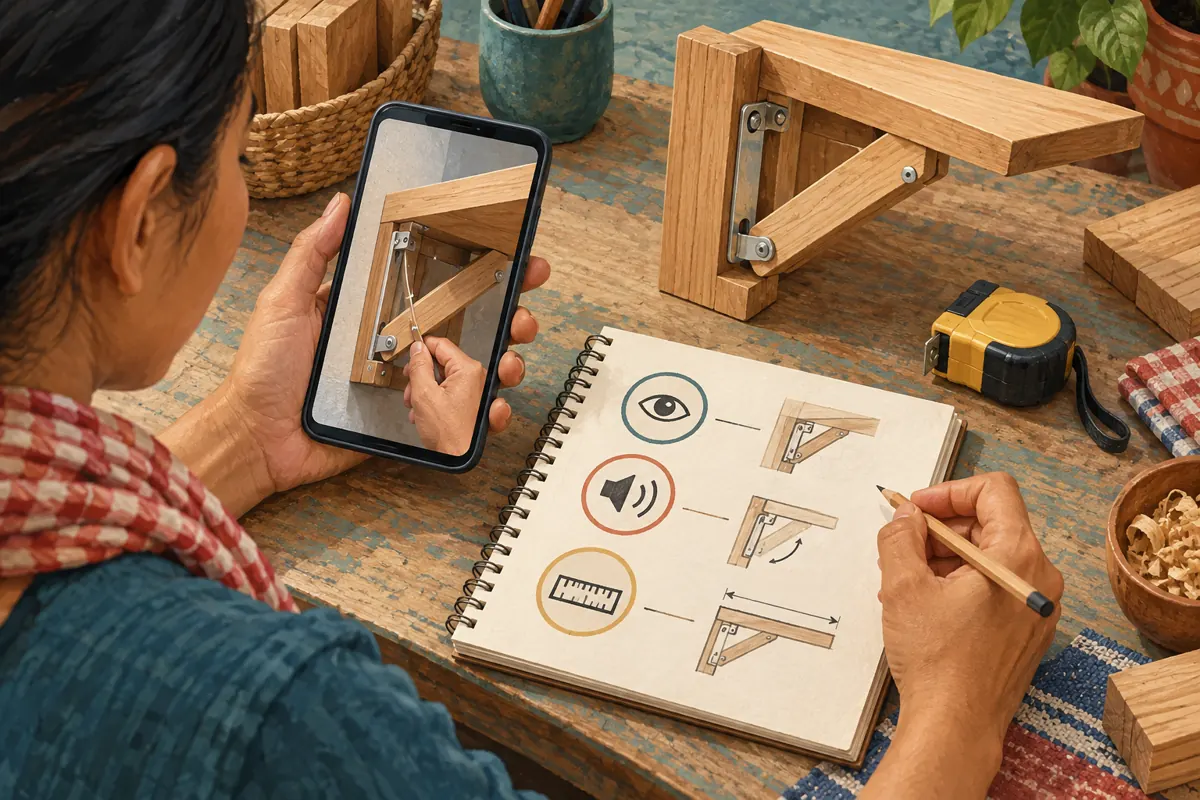
First, watch with the sound muted. Check whether the opening action, product shape and important close-ups remain understandable. The purpose is to find information carried only by speech, then decide whether a clearer shot or brief caption would help. Do not assume every visual needs a label.
Second, listen while watching normally. In a Cambodian workshop, surrounding traffic, tools or conversation may compete with the presenter. Ask the reviewer to repeat the essential explanation in their own words. If they cannot distinguish the shelf’s depth from its width, investigate the wording and audio rather than immediately increasing the caption size.
Third, pause at the product details. Check that the model shown matches the offer, units are stated consistently and accessories are clearly identified. Do not infer a weight capacity from objects placed on the shelf for filming. Any capacity or installation claim needs a reliable basis appropriate to the actual product.
6. Turn feedback into corrections someone can complete
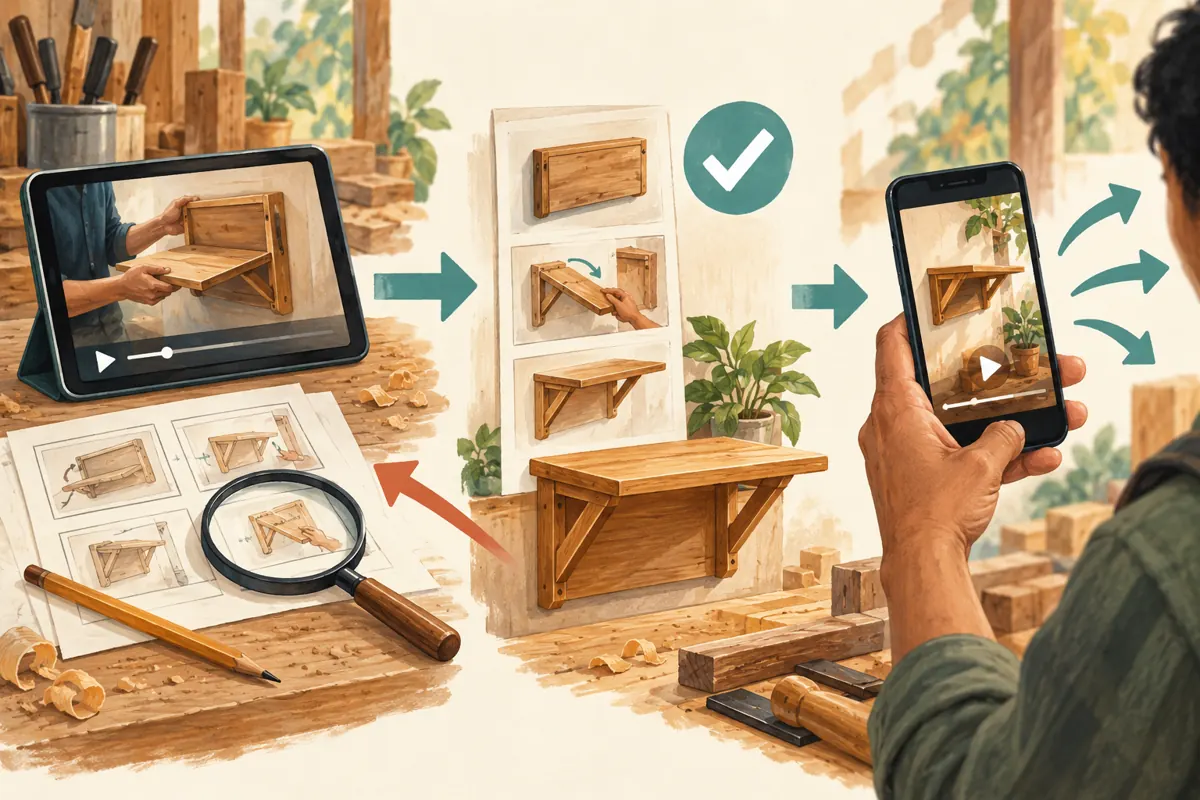
Use a simple feedback structure: location in the video, observed problem, likely buyer misunderstanding and requested correction. A hypothetical note might read: “At the opening close-up, the hand covers the release point. A first-time viewer may think the support folds automatically. Film the release action from the side.” This is an actionable observation, not a prediction about sales.
Separate necessary fixes from preferences. A wrong measurement, concealed mechanism or unsupported statement should block release. A preference for warmer lighting may be optional if the finish remains represented accurately. Labeling the difference helps the editor work without repeatedly asking which comment matters most.
Keep corrections in one agreed place, such as a shared review document or a dedicated team conversation. Give each necessary fix an owner. After the edit, record what changed and have the relevant reviewer confirm it. “Seen” and “approved” should have different meanings in the team’s process.
7. Check the offer around the video
A clear mechanism demonstration can still lead to confused enquiries if its surrounding offer is vague. Review the title, description, thumbnail and contact instructions together. Explain whether the example is a standard product or a custom build, whether installation is included and which details require a quotation. Include only conditions the workshop has actually confirmed.
For this hypothetical workshop, a useful enquiry instruction is to send the desired shelf dimensions and a description of the intended installation area through the business’s chosen contact channel. Request sensitive location details privately when needed. Do not invite customers to post their full home address in public comments.
Check language against the intended audience. An English title attached to a Khmer demonstration may need a clear language cue. Likewise, a measurement shown on screen should mean the same thing as the term spoken aloud. Local relevance comes from practical clarity, not from inserting Cambodian place names into every sentence.
8. Keep SMM panel evaluation separate from approval
The supplied smmchhean.com catalogue includes the exact service name “YouTube Like ~ Max 100k ~ 50k/days ~ Instant ~ 𝐍𝐎 𝗥𝗘𝗙𝗜𝗟𝗟”. Its title identifies it as a YouTube likes offering. The brief supplies no description, so the wording is not independent verification of delivery speed, audience identity, suitability or other performance claims.
YouTube’s fake engagement policy prohibits artificially increasing views, likes, comments and other metrics. It also explains that a hired promoter’s actions can affect the channel. A service being listed in a panel does not establish that its method complies with platform rules. Do not use artificial engagement to create an appearance of approval for the draft.
For this workflow, the practical decision is to complete the content review without an engagement order. Purchased engagement is not evidence of genuine interest, sales, advertising delivery or Cambodian viewers. If promotion support is considered later, evaluate the actual method and applicable rules before committing money. Preserve the catalogue reference separately from the reviewers’ findings.
9. Make a release decision with a clear owner
Use three possible outcomes: ready, revise or hold. Ready means the essential explanations and offer details have been checked. Revise means a specific, fixable communication problem remains. Hold means something fundamental is unresolved, such as uncertainty about the model being sold or permission to use footage. Do not turn a deadline into automatic approval.
The release owner should reopen the approved version and confirm that all blocking notes are resolved. Check the opening, the mechanism close-up and the final enquiry instruction again. If the editor has changed footage after approval, review the affected material before proceeding. Approval belongs to a particular version and set of claims.
Once the owner makes the video public, test the customer-facing link and prepare the accompanying promotional message. Lead with the question the demonstration answers. Avoid describing the review as a customer endorsement: internal review establishes readiness to communicate, not market acceptance.
10. Learn from enquiries without rewriting the evidence
After release, keep a small record of genuine questions about the demonstration. If customers repeatedly ask whether the shelf folds completely flat, inspect whether that position is actually shown. If they ask about fitting it to a particular wall, decide whether the existing video needs a clearer boundary or whether a separate explanation would be more useful.
Distinguish content feedback from commercial outcomes. A reviewer catching a wrong dimension is a successful review event. An enquiry is a contact event. A confirmed order is a separate business event. None should be substituted for another in a report.
Common mistakes include circulating the draft too widely, accepting vague praise as approval, overlooking the offer around the video and treating a higher engagement count as proof of comprehension. Keep the process focused on observable problems and completed corrections. That makes the next product demonstration easier to prepare without promising any particular reach or sales result.
Frequently asked questions
Can I send an unlisted draft to a customer for feedback?
Yes, if the content is suitable for wider circulation and the customer agrees to help. Explain that it is a draft and give them a focused question. Do not treat their participation as permission to publish their name, quote their feedback or imply an endorsement. For sensitive footage, reconsider the access method.
How many reviewers does a small workshop need?
There is no useful universal number. Cover the important knowledge: product accuracy, customer questions and language clarity. A small team can combine roles, but someone unfamiliar with the filming should ideally watch the draft. Add reviewers when they contribute missing expertise, rather than collecting more general opinions.
Should every reviewer suggestion delay publication?
No. Separate factual errors and important comprehension problems from cosmetic preferences. A wrong measurement requires correction; a preference for different background decoration may not. The release owner should document the decision when a suggestion is declined, especially if it concerns what the buyer may reasonably understand.
Can likes tell us whether customers understood the mechanism?
A like does not explain what a viewer understood. Ask reviewers to describe the opening action and identify any unclear step. After release, examine actual questions for recurring confusion. Purchased likes cannot establish that the audience is Cambodian, interested in buying or able to use the product correctly.
What if we discover a product error after promotion starts?
Pause promotional messages that repeat the error, establish the correct information and decide whether the footage itself needs revision. Tell colleagues handling enquiries what changed. Check any customer conversations affected by the mistaken statement. Correct the substance before resuming promotion, and record which version contains the accurate explanation.
Explore the current service catalogue, create an account, or ask a specific question through support tickets.
Prepared with AI assistance. Illustrations explain the workflow and do not represent customer results.