20/10/2026 20:35
Which Lid-Care Guide Comes Next? YouTube End Screens for Cambodian Flask Shops
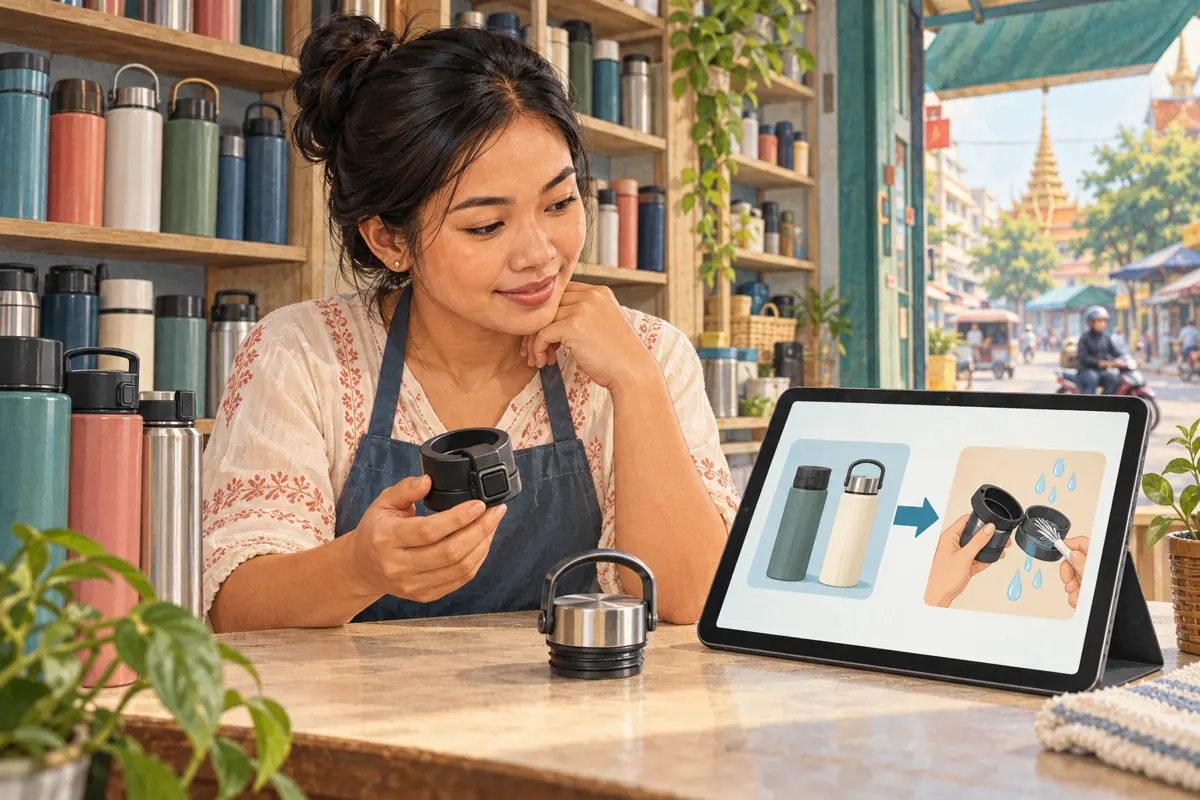
A flask comparison can answer which bottle suits a customer's routine while leaving another question unresolved: where is the care guide for this particular lid? A Cambodian household-goods shop may sell several bottles that look similar but use different closures. Sending everyone to the newest upload can therefore create confusion. This guide explains how to plan a deliberate next step using a YouTube end screen, check the destination against the actual product, and evaluate the result without confusing engagement counts with customer understanding. The shop and product examples below are hypothetical; they illustrate an editorial workflow, not reported customer results.
1. Start with the question left after the comparison
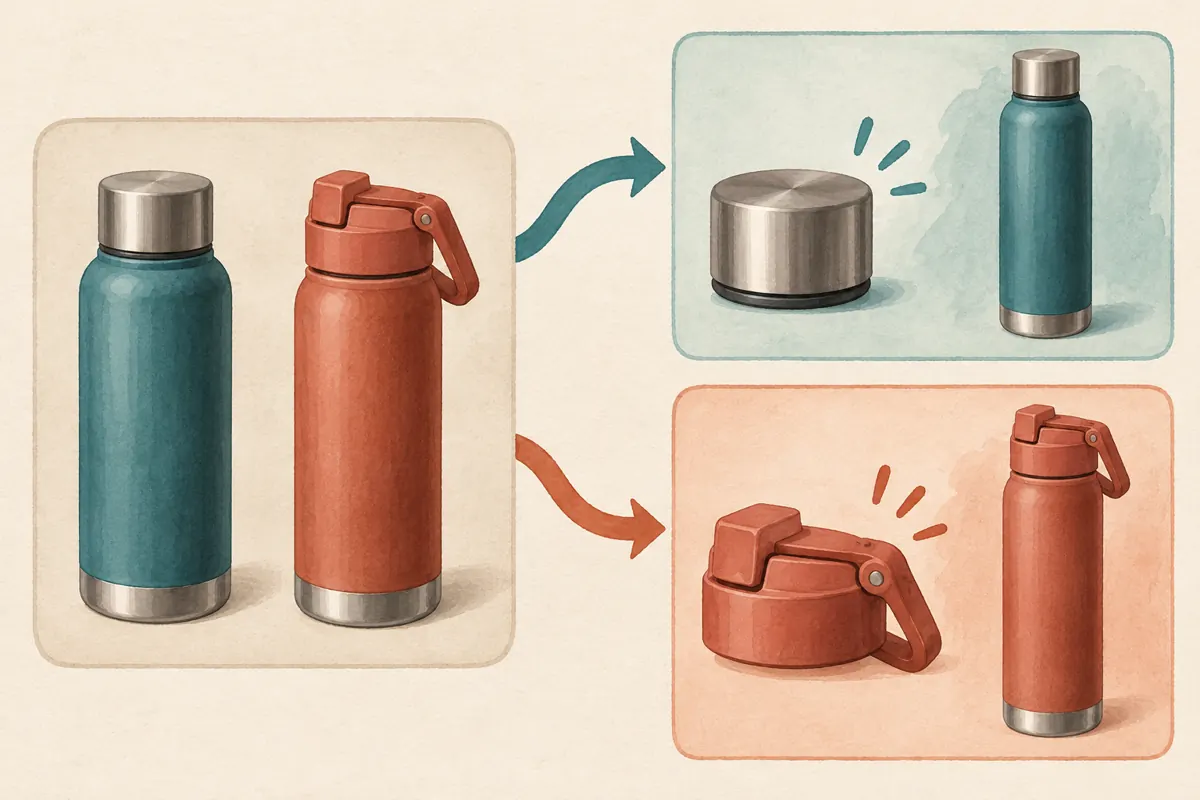
Imagine a hypothetical Phnom Penh shop filming two insulated flasks: one with a screw cap and another with a flip lid. The comparison explains their shape, opening method and carrying features. At the end, an owner of the flip-lid model may want cleaning instructions, while someone still choosing may want another comparison. Write down which viewer the ending should help before choosing the destination.
Use a short planning sentence: someone who has identified the flip-lid model should next find its matching care demonstration. This makes the purpose specific enough to review. Avoid a vague instruction such as keeping people watching. A useful continuation should resolve a real question even if the viewer never subscribes, sends a message or buys another flask. That standard keeps the promotion connected to practical customer service.
2. Match the guide to the physical lid
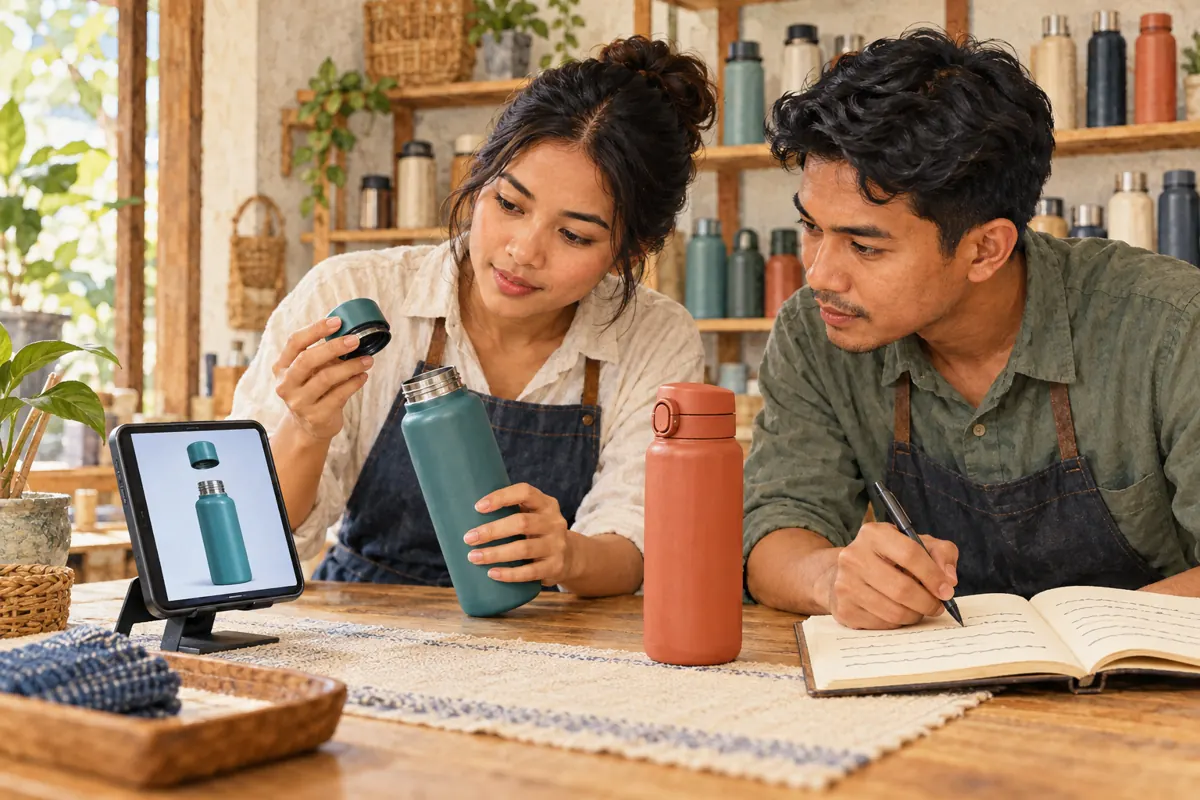
Place the actual products beside the proposed destination videos. Compare the closure, drinking opening, underside and any visible model identifier. Colour alone is a weak identifier because different versions may share a finish. Ask the person who handles stock to confirm which guide applies. If the supplier has changed the lid while retaining the bottle name, record that difference before linking the videos.
For this hypothetical shop, an internal note could read: teal screw-cap flask, current lid version, guide filmed with the same sample. Keep that note beside the source and destination video references. Do not infer that a seal or component is removable because another flask's guide shows it being removed. Base care demonstrations on the relevant product instructions. The editorial task is to route viewers accurately, not invent universal cleaning advice.
3. Check eligibility before designing the ending
YouTube permits end screens within a video's final 5–20 seconds; the video must last at least 25 seconds. Videos designated made for kids cannot use them. Check these requirements before planning the edit. [YouTube end-screen guidance](https://support.google.com/youtube/answer/6388789?hl=en)
For the shop's workflow, choose a regular product demonstration with a complete explanation and a natural closing moment. Do not stretch a tiny clip with an unrelated closing sequence simply to accommodate navigation. Equally, do not change an audience designation merely to obtain a feature. If the existing recording ends while the presenter is still showing an important detail, plan a better ending for the next production. A useful destination cannot compensate for an unfinished source explanation.
4. Choose one clear continuation
YouTube offers a specific video, the latest upload or a viewer-based selection as video-element options. For this model-specific workflow, choose the exact guide you checked. [YouTube end-screen options](https://support.google.com/youtube/answer/6388789?hl=en)
A useful decision process starts with product identity. If the comparison mainly concerns one lid, recommend that lid's guide. If it genuinely gives equal attention to two different lids, consider presenting both guides, provided viewers can distinguish them immediately. If neither guide accurately matches current stock, finish the missing guide before promoting the pathway. Do not send viewers to an approximate substitute just to fill the ending.
Write a reason beside every proposed destination. For example: this video shows the closure featured in the final demonstration. If the reason is only that the destination needs more views, reconsider the choice. That test helps a small shop resist turning every product video into an unrelated general advertisement.
5. Give the recommendation a place in the script
Finish the useful demonstration before delivering the invitation. A hypothetical closing line might say: if your flask has this flip lid, the matching care guide shows this version in detail. Hold the relevant product steady so the spoken description and visible object agree. Avoid saying only click here; the instruction should remain understandable when someone hears the video without looking at that instant.
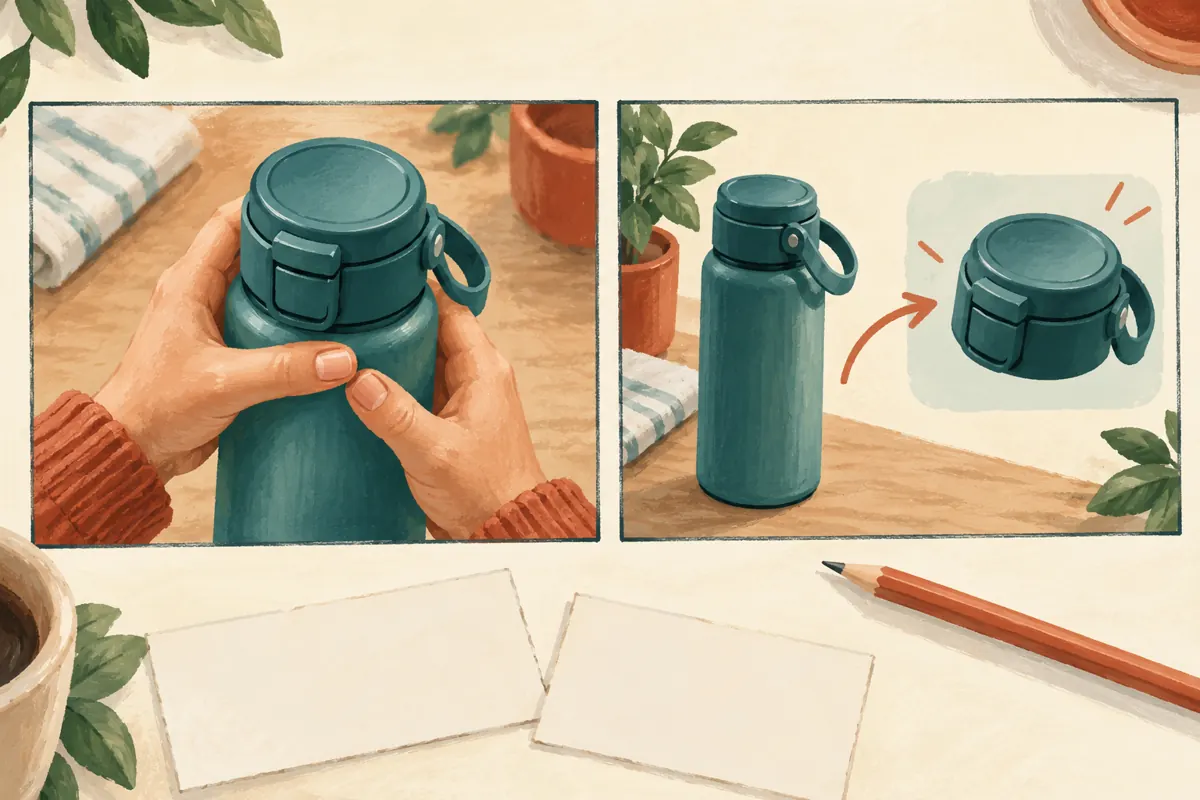
For a Cambodian audience watching a Khmer demonstration, write and review the spoken invitation in natural Khmer, even if the team's planning notes are in English. Keep the product identifier consistent between recordings. In the storyboard, reserve a quiet area beside the flask for the recommendation and keep the presenter’s hands away from that area. Avoid placing the final model-identification close-up beneath the planned card. The illustration accompanying this section shows a conceptual layout, not a product instruction.
6. Add the element and record the selection
In YouTube Studio, open Content, select the source video, then Editor and End screen. Add the video element, select the checked destination, adjust its placement and timing, preview, and save. [Official setup instructions](https://support.google.com/youtube/answer/6388789?hl=en)
Before saving, read the destination title against your planning note. Similar thumbnails can make two lid versions easy to confuse. After saving, record the source video, chosen destination, product version, review date and responsible person in your normal editorial record. This can be a simple shared document; the task does not require a complex customer database.
Have another colleague compare the selected guide with the physical flask when possible. Give them a concrete question: does this video show the lid we just demonstrated? That review is more useful than asking whether the ending looks professional, because an attractive layout can still send viewers to the wrong instructions.
7. Test the complete viewing journey
Start the review before the ending so you experience the transition in context. Listen for a completed explanation, identify the lid being discussed and follow the recommendation. At the destination, check whether the opening immediately confirms the correct product. A viewer should not need to watch an unrelated introduction to discover whether they have reached the right guide.
Ask a colleague unfamiliar with the edit to explain what they expect the destination to contain before opening it. If their answer differs from the guide's purpose, revise the invitation or destination presentation. Also test on a phone used for ordinary viewing rather than judging only from the editing screen.
End-screen visibility varies by device and context, and viewers may hide it. Avoid promising that everyone will see the same ending. [YouTube visibility limitations](https://support.google.com/youtube/answer/6388789?hl=en)
8. Keep SMM-panel decisions separate from navigation
The supplied smmchhean.com catalogue includes the exact service name “YouTube Like ~ Max 5k ~ 5k/days ~ Instant ~ 𝐍𝐎 𝗥𝗘𝗙𝗜𝗟𝗟”. Its label identifies a YouTube-like offering, but the supplied description is empty. The name alone does not establish delivery quality, audience location, genuine interest or suitability for this task. Its speed and quantity wording should not become promises in the shop's campaign plan.
YouTube prohibits artificial increases to engagement metrics and says hired promoters' actions can affect the channel. Decline methods that violate that rule. [YouTube fake engagement policy](https://support.google.com/youtube/answer/3399767?hl=en)
An end-screen project needs accurate content and functioning navigation; a like service does not provide either. Purchased engagement is not evidence of sales, advertising delivery or Cambodian viewers. If earlier panel activity exists, retain its records separately and avoid attributing changes in public counts to the new ending. There is no reason to place an engagement order merely to test this workflow.
9. Review navigation without inventing business results
YouTube's video Analytics includes an End screen element click rate card under Engagement. Treat it as navigation evidence. [YouTube end-screen measurement](https://support.google.com/youtube/answer/6388789?hl=en)
Before reviewing results, write the question you want answered: are viewers choosing the intended continuation? Keep this separate from whether customers understand the cleaning steps or whether the shop sells more flasks. Those questions need their own evidence. A click can take someone to a guide without proving that they watched, understood or followed it.
Use a fixed review window and note any other changes, such as a new thumbnail, a seasonal offer or a different source of visitors. If activity is too limited to support a conclusion, record that plainly. Genuine enquiries can reveal remaining confusion, but a handful of messages is not a representative survey. Use them to identify a possible explanation problem, then inspect the relevant footage.
10. Correct common mistakes and maintain the route
Common mistakes include choosing a destination by thumbnail colour, recommending a newly uploaded but unrelated product, and ending with several competing requests. Another is hiding the only clear view of the lid beneath the recommendation. Fix each problem at its source: verify the model, choose the relevant guide, simplify the invitation and reposition the final shot. Do not try to compensate with stronger promotional language.
Assign a review trigger rather than relying on memory. Recheck the route when a supplier changes the lid, a care guide is replaced, the source narration changes or the destination becomes unavailable. A discontinued flask may still have owners who need its guide, so distinguish an older model from an incorrect guide. Preserve useful explanations where appropriate and make the model version clear. Promotion remains useful when the destination continues to answer the question that brought the viewer there.
Frequently asked questions
Should a comparison of two lids recommend two guides?
Only when both routes are useful and easy to distinguish. Show the identifying features clearly and make each guide's purpose obvious. If the closing explanation focuses on one lid, a single continuation may be easier to understand. The decision should follow the viewer's unresolved question, not a desire to fill every available space.
What if the correct care guide has not been filmed?
Treat that as a content gap. Prepare the matching sample, confirm the manufacturer's care instructions and record the needed guide before recommending it. An approximate guide for another model can create more confusion than an ending without a recommendation. Do not promise a destination that the customer cannot yet use.
Can an end-screen click be reported as a potential sale?
Report it as a navigation action. The viewer may already own the flask or simply be researching it. A sales enquiry requires an actual enquiry, and a completed sale requires a transaction record. Keeping those definitions separate makes the review more useful when deciding what content to improve.
Should the shop remove the route when the flask sells out?
Not automatically. Existing owners may still need the care demonstration. Check whether the source video makes a current stock promise, and correct outdated commercial information where appropriate. Keep model identification clear so viewers understand whether the guide concerns an older version or a product presently offered by the shop.
How should a small team divide responsibility?
Let the stock handler verify the product version, the editor configure the ending and another colleague test the viewing journey. One person can perform several roles, but each check should still happen. Record who owns future reviews so a changed lid or replacement guide does not leave an outdated route in place.
Explore the current service catalogue, create an account, or ask a specific question through support tickets.
Prepared with AI assistance. Illustrations explain the workflow and do not represent customer results.