19/10/2026 05:03
Which Thumbnail Explains the Product? A YouTube Testing Workflow for Cambodian Bicycle Shops

A useful bicycle demonstration can still be difficult to recognize from its thumbnail. A close-up might explain the mounting bracket but hide the product. A full bicycle photograph might show the finished appearance while making the basket almost invisible. For a Cambodian shop promoting practical accessories, the question is specific: which image helps someone understand what this video will show? This article follows a hypothetical Phnom Penh bicycle shop comparing thumbnail ideas for one basket demonstration. It explains how to prepare a meaningful experiment, make a reasonable decision when evidence is limited, and evaluate SMM panel offers without confusing purchased engagement with customer preference. The objective is a clearer invitation to useful content, followed by an honest interpretation of the result.
1. Choose a decision the shop can actually use
Start with a question about presentation rather than a wish for more views. In this hypothetical example, the shop has filmed a basket installation and everyday packing demonstration. Its practical question is whether the thumbnail should emphasize attachment, appearance, or ordinary use. Each answer would guide the next product shoot, making the experiment useful beyond one upload.
Write the decision before designing anything: choose the clearest visual approach for this basket video. Avoid expanding it into a claim about every Cambodian cyclist. Someone shopping for a delivery accessory may have different concerns from someone choosing a bicycle for short neighborhood trips. The experiment concerns a particular video and its viewers; it does not establish a universal national preference.
2. Select a video with a stable, truthful promise
Choose a demonstration that still represents what the shop sells. Check the basket model, included mounting parts, installation explanation, and any spoken availability statement. If the video shows a discontinued bracket or leaves out an essential compatibility limitation, correcting that problem is more useful than testing its cover image. An attractive thumbnail cannot repair a misleading demonstration.
For the hypothetical shop, a suitable video shows the actual basket, explains the attachment points, and demonstrates a modest everyday load. Avoid an experiment built around a short-lived discount unless the team can keep the offer accurate throughout the review period. Stable information makes the eventual design choice easier to reuse and prevents an expired promise from becoming the most prominent part of the video.
3. Prepare three visual hypotheses
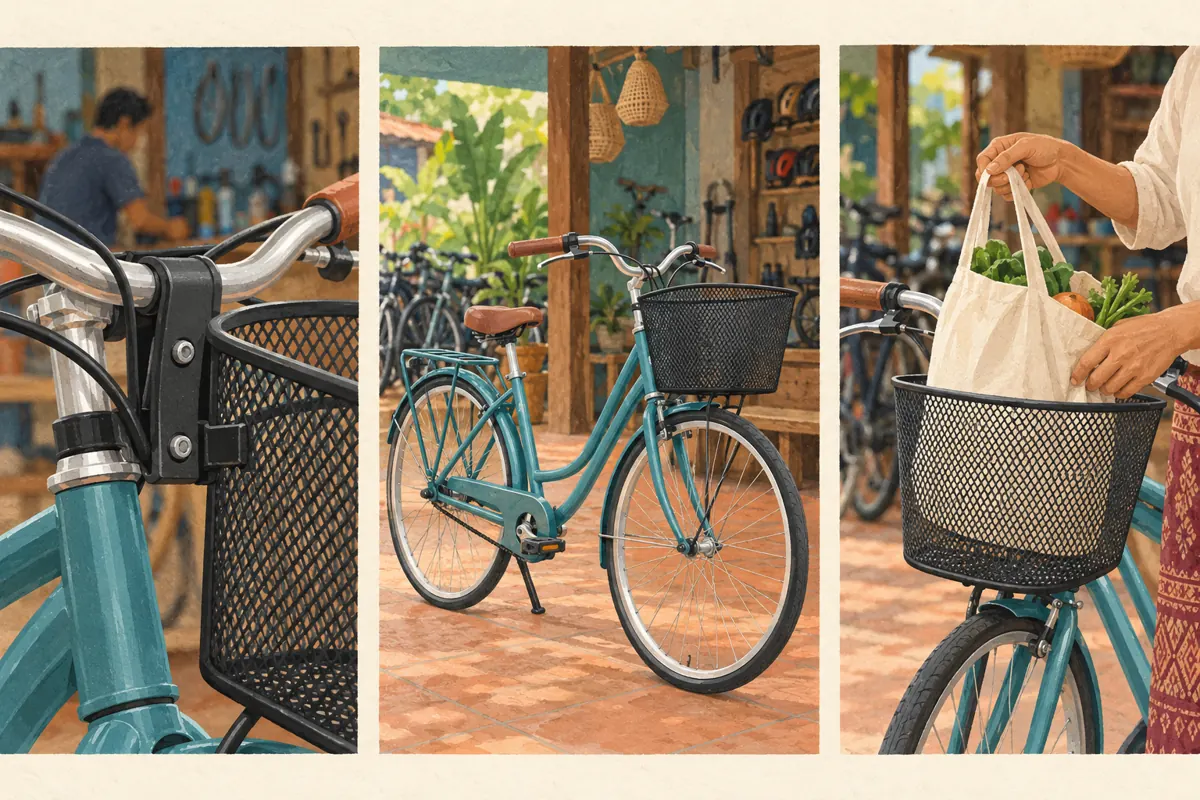
Give each candidate a distinct reason to exist. The attachment version shows the bracket clearly and asks whether installation detail is the strongest invitation. The appearance version shows the basket on the complete bicycle and asks whether context helps. The everyday-use version shows a modest grocery bag inside the basket and asks whether a familiar task explains the benefit.
These are hypothetical creative alternatives, not claims about proven performance. Keep the basket model, overall finish, and factual promise consistent across them. Avoid comparing a carefully lit photograph against an accidental blurry frame: that would mix the visual idea with basic production quality. Label the working files by concept so the team can discuss what changed without relying on memory.
4. Match every image to something viewers will see
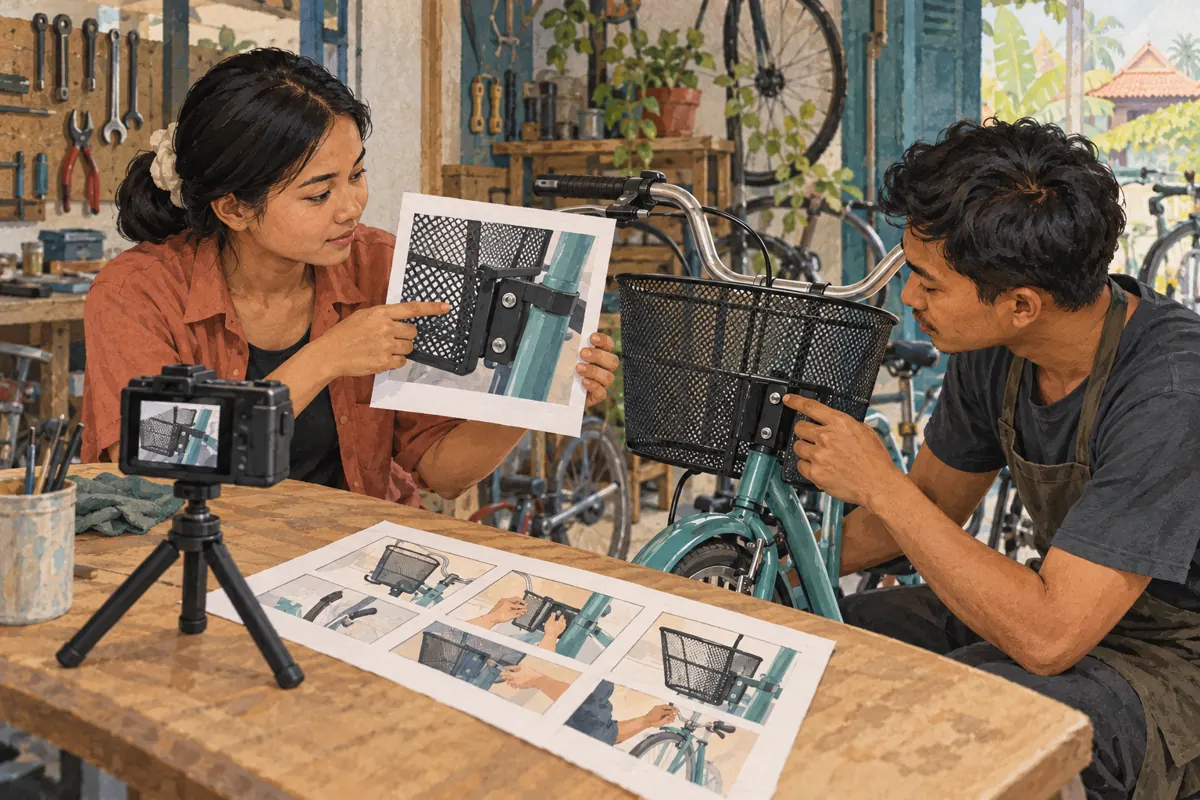
Review each candidate beside the finished video. Identify the moment that supports the image. If the thumbnail emphasizes a quick-release mechanism, the demonstration should actually show that mechanism. If it shows groceries, the video should explain that use without implying a tested weight capacity that the shop cannot substantiate. A close-up should depict the supplied bracket, not a more expensive alternative.
For a Khmer-speaking audience, any thumbnail wording should be brief and checked by someone comfortable with the language. Keep the same wording across this particular experiment so the visual emphasis remains the main question. A text-free candidate can also work when the picture communicates clearly. Do not add a Cambodian flag or a familiar landmark merely to imply local relevance; the product explanation should earn that relevance.
5. Set up a thumbnail-only experiment
YouTube’s official A/B testing guidance says the feature is available in desktop Studio and requires advanced features. Shorts, private videos, made-for-kids videos, and mature-audience videos are excluded. For an eligible video, open its details, choose A/B Testing under Thumbnail, select Thumbnail only, upload up to three candidates, and click Done. Consult the current guidance for full eligibility details: https://support.google.com/youtube/answer/16391400?hl=en
YouTube says tests can take up to two weeks; changing the title or thumbnail stops the test. Results use watch time share and may be Winner, Performed Same, or Inconclusive. Variations run concurrently. Treat those results as evidence about the tested presentation, not proof of purchases. Before starting, tell the shop team which video is involved and assign one person to manage any necessary correction.
6. Keep SMM panel offers outside the test question
The supplied public catalogue includes “YouTube Views ~ Native Social Ads ~ Min 1M ~ 100k+/day ~ 0-12hrs ~ 𝐋𝐢𝐟𝐞𝐓𝐢𝐦𝐞”. The name presents it as a view service, but the supplied description is empty. Its wording alone does not verify advertising placement, traffic quality, audience location, delivery terms, or platform affiliation. It also does not establish that any delivered traffic would contribute usable evidence to a thumbnail experiment.
Do not buy views to manufacture a decisive result. Purchased engagement is not evidence of genuine interest, sales, ad delivery, or Cambodian viewers. YouTube prohibits artificial metric inflation and warns that a hired promoter’s actions can affect the channel. Read its policy before considering any provider: https://support.google.com/youtube/answer/3399767?hl=en-GB. If the promotion method cannot be explained and checked, do not use it. A catalogue label is insufficient reassurance, and a larger public count cannot answer which image better serves prospective customers.
7. Give the experiment a simple operating routine
Use a short internal note containing the video, the visual question, the three concepts, the start date, and the person responsible. This is an experiment brief, not an elaborate reporting system. Its purpose is to stop a colleague from replacing the thumbnail because they prefer another color or because a supplier has sent a new product photograph.
Continue necessary customer service, but record unusual promotion that changes the context, such as sharing the video with a specialist cycling community. Do not assume such activity invalidates everything; note it so later conclusions remain proportionate. If the basket becomes unavailable or the video needs a factual correction, prioritize accuracy. Explain why the experiment was interrupted rather than presenting an unfinished comparison as a completed finding.
8. Decide what to do when the result is uncertain
Set your fallback rule before seeing the outcome. If the experiment does not identify a clear difference, choose the candidate that most accurately describes the demonstration and is easiest to understand. For the hypothetical shop, that might be the complete bicycle image because it shows where the basket sits. That is an editorial choice, not a measured performance victory.
Do not repeatedly restart the same comparison until the preferred design appears successful. Instead, ask whether another test would resolve a meaningful business decision. Perhaps all three images communicate adequately, and the next useful improvement is a better installation explanation. Time spent producing nearly identical variants has a cost. A small shop can reasonably stop testing and direct its effort toward answering an unresolved customer question.
9. Separate a presentation finding from a sales finding
Suppose, hypothetically, the attachment image receives the strongest result. A restrained conclusion is that the attachment-focused presentation worked better in that experiment. It does not establish that installation is every buyer’s main concern, that the basket is more popular than another product, or that the video created additional purchases. Those are different questions requiring different evidence.
The shop can still learn from genuine conversations. When someone asks about compatibility after watching, record the question without turning it into a testimonial. If a customer voluntarily explains how they found the shop, preserve that distinction from a staff assumption. These observations can suggest the next demonstration, but they should not be combined with purchased counts to create an inflated story of campaign success.
10. Avoid mistakes that make the comparison less useful
One common mistake is changing everything at once: a new title, different product angle, discount badge, and stronger claim. Even if the overall presentation improves, the team cannot confidently identify which idea deserves reuse. Another is testing differences so minor that no practical design decision follows. Move from a genuine visual question to a controlled set of alternatives.
A third mistake is selecting a dramatic image that the video cannot support, such as an overloaded basket or an invented before-and-after scene. Finally, avoid calling an uncertain result a winner in a client report. State what was observed, what remains unknown, and what the shop chose to do. Honest uncertainty is useful when it prevents the next promotion budget from being built on a false assumption.

Frequently asked questions
Should a small Cambodian shop test thumbnails if its video attracts little attention?
It can prepare a useful comparison, but it should not make a definitive result a condition of progress. First check whether the video answers a real customer question and whether the candidates communicate meaningfully different ideas. If evidence remains limited, choose the clearest accurate option. Spending more time filming a missing compatibility explanation may be more valuable than producing additional thumbnail variations.
Can staff choose the best thumbnail without running an experiment?
Yes. Staff can make an editorial decision based on accuracy, clarity, and the intended viewer. Ask each reviewer to describe what they expect the video to show before revealing the intended message. This can expose confusion, such as mistaking a basket installation guide for a bicycle sale. Describe the outcome as an internal review, not evidence of audience-wide preference.
Should Khmer and English thumbnail text be compared in this test?
Keep language consistent when the immediate question concerns the picture. Changing both language and visual emphasis makes the lesson harder to interpret. If language choice is a separate business question, design a separate review around the actual audience and the language used in the video. An English cover on a Khmer demonstration could create an expectation that the content does not meet.
Does an SMM service name containing “Native Social Ads” prove it is suitable?
No. A service title does not document the delivery method or establish compliance. Request a plain explanation of where promotion appears, how people encounter the video, and what evidence supports the provider’s claims. Do not infer geographic targeting or genuine intent from the title. If the explanation remains unclear, keep that service out of the promotion plan.
What should the team reuse after finishing the comparison?
Reuse the design principle cautiously: for example, showing the attachment point may be a promising approach for another installation video. Save the actual candidates and a brief explanation of the decision. Do not turn one result into a rule that every future thumbnail must follow. A rain cover demonstration, a repair tutorial, and a bicycle comparison may need different visual explanations.
Explore the current service catalogue, create an account, or ask a specific question through support tickets.
Prepared with AI assistance. Illustrations explain the workflow and do not represent customer results.